What Is Seasonal Color Analysis? Discover the Colors That Truly Suit You

Let’s Have a Real Chat About Colors

You know that feeling when you try on something in a fitting room and suddenly—you just look alive? Your eyes sparkle, your skin glows, and you stand up a little straighter. And then other times… you put something on and feel kind of invisible. Maybe even a little drained.

I used to think that was just “one of those days.” Turns out, it was the colors.


Here’s What Nobody Tells You About Finding Your Colors

It’s not about rules. It’s not about what’s trending. And it’s definitely not about squeezing yourself into a box.

It’s about something much simpler: feeling like yourself.

When you wear colors that harmonize with your natural coloring—your skin, your eyes, the unique way light hits you—something shifts. You don’t just look better. You feel more confident. More authentic. More… you.

And honestly? That’s what this is all about.


Think of It Like This:

Remember picking out a frame for a photo? Some frames disappear. Some fight with the picture. But the right one? It makes the photo come alive. It makes you see the beauty that was always there.

Your colors are that frame. For you.


So What Are “Seasons” Really About?

We use seasons as a gentle guide—not a label. Just a way to make sense of which colors tend to play nicely with certain features:

If you’re a Spring:

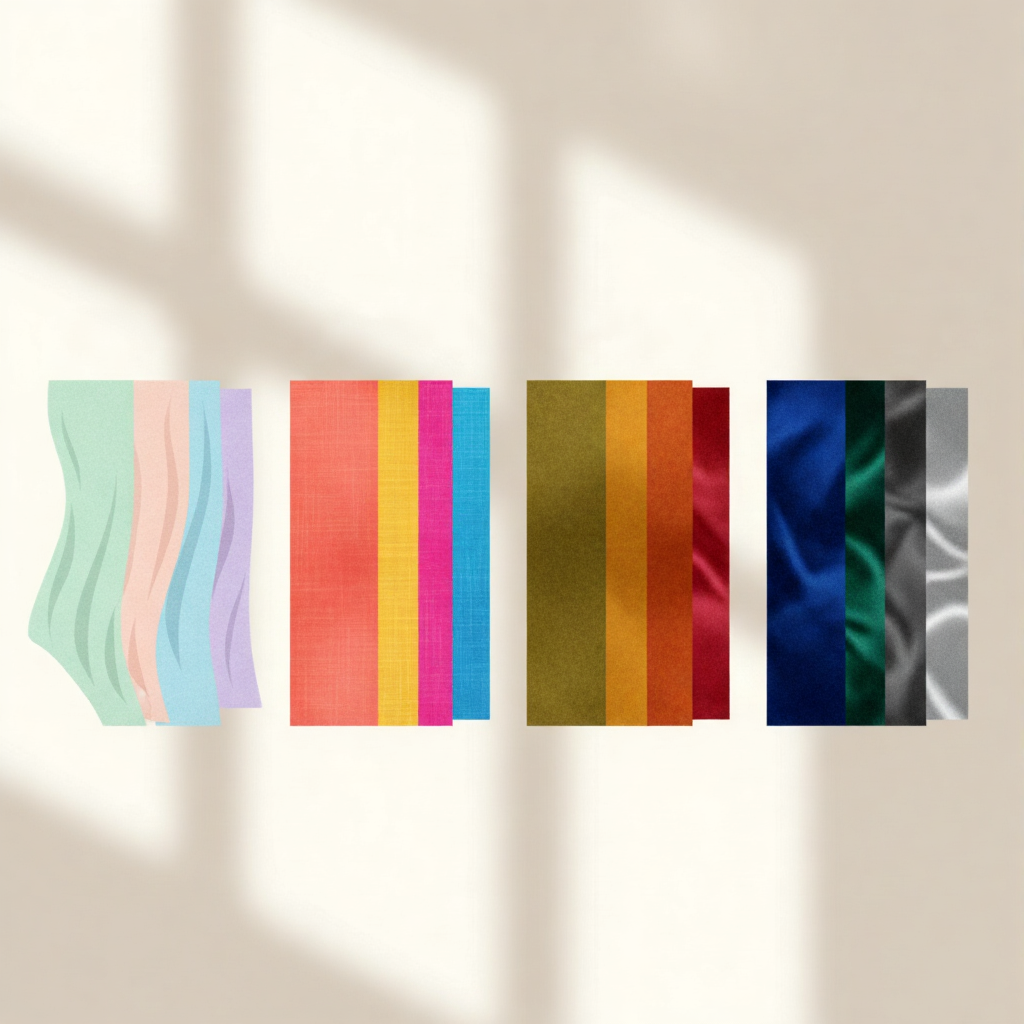
You light up in warm, sunny colors. Think coral, peach, soft yellow, fresh green. You bring a kind of gentle brightness wherever you go.

If you’re a Summer:

Cool, soft colors love you. Lavender, dusty rose, powder blue—they give you this calm, elegant glow. Everything feels peaceful and put-together.

If you’re an Autumn:

Rich, earthy tones feel like home. Olive green, rust, mustard, warm browns—they wrap you in cozy confidence. You feel grounded and real.

If you’re a Winter:

Bold, clear colors make you shine. Black, white, true red, emerald—you carry drama with ease. There’s a beautiful clarity to your look.


Why This Matters More Than You Might Think

I’ll tell you a secret: this isn’t really about clothes.

It’s about mornings that start easier because you know what to wear.
It’s about saving money because you buy less but love everything more.
It’s about looking in the mirror and thinking, “Yes. This feels right.”
It’s about people saying, “You look great!” and you actually feeling it too.


Want to Try Something Fun?

We made a little quiz. It’s not a test—there are no wrong answers. It’s more like a conversation with a friend who’s good at noticing things about you.

It asks simple questions. Things like whether gold or silver feels more “you.” What colors people compliment you on. How your skin looks in natural light.

It takes about two minutes. And at the end, it gives you a gentle nudge in the right direction. A “maybe try these colors and see how they feel” kind of moment.


No Pressure. Just Possibility.

You don’t have to overhaul your wardrobe tomorrow. You don’t have to throw anything away. Just… maybe try one thing. One scarf in a color that might be yours. One lipstick. One shirt.

See how it feels.

Because here’s what I’ve learned: The right colors don’t change who you are. They just help you show up as yourself, a little more brightly.


If you’re curious—really, genuinely curious about what might look and feel amazing on you—I’d love for you to try our quiz.

It’s free. It’s kind. And it might just give you that little “aha” moment we all deserve.

[Find Your Colors Here – It’s Easier Than You Think]

Here’s to looking in the mirror and loving what you see. Not because you’re perfect, but because you’re perfectly you.

Is A Seasonal Color Analysis Quiz Accurate?

seasonal color analysis quiz accuracy explained

Can an Online Color Quiz Really Tell You Your Best Colors?

Let’s be honest. You’ve probably taken one of those “What’s your color season?” quizzes online and thought, “Is this thing for real? Can a few questions actually figure out the colors that make me look amazing?

It’s a totally fair question. We’ve all been burned by random internet quizzes that tell us which Disney princess we are. But when it comes to color analysis, the answer is more interesting: Yes, a good quiz can be surprisingly accurate, but there are some big “ifs” involved.


How Does a Color Quiz Actually Work? (No Magic, Just Logic)

Think of it less like a fortune teller and more like a friendly detective.

A well-built quiz isn’t just asking random questions. It’s following the established map of color theory. It’s looking for clues in your answers to piece together your coloring puzzle.

The clues it’s searching for:

  • Your skin’s undertone: Is it warm (golden/peachy), cool (pink/rosy), or neutral? (This is the biggest clue of all).
  • Your natural contrast: Is there a high contrast between your hair, skin, and eyes (like dark hair + fair skin), or is it softer and more blended?
  • Your color clarity: Do you shine in bright, clear colors, or do soft, muted tones make you glow?

By connecting these clues, the quiz matches you to a seasonal “family” (Spring, Summer, Autumn, Winter) whose palette shares those same traits.


The Truth About Accuracy: It’s a Partnership

Here’s the real talk: A quiz is only as good as the answers you give it.

For the best results, you need to be its partner.

  • ✅ DO: Answer based on your natural features. Your skin without a tan. Your hair before you dyed it. What you see in natural daylight.
  • ❌ DON’T: Answer based on your favorite color, or what you wish looked good on you.

A quiz can’t see you. It can’t drape fabrics under perfect lighting. So it needs your honest observation to guide it. If you give it thoughtful, truthful clues, it can give you a remarkably accurate starting point.


Online Quiz vs. Professional Analysis: What’s the Difference?

Imagine the difference between using a great recipe app and having a personal chef cook in your kitchen.

The Professional (The Personal Chef):

  • Pros: In-person, uses real fabric drapes, observes subtle reactions in your skin in real time. Incredibly precise.
  • Cons: Can be expensive, time-consuming, and hard to find.

The Well-Designed Quiz (The Great Recipe App):

  • Pros: Free, instant, convenient, and based on the same foundational principles. For most people, it provides more than enough clarity to revolutionize their wardrobe.
  • Cons: Relies on your self-perception. Can’t capture every subtle nuance.

The Verdict: For 95% of people looking for real, actionable style help, a high-quality quiz is more than sufficient. It’s the perfect place to start your journey.


“Will This Work for My Skin Tone?” (Spoiler: Yes.)

This is a crucial point. Seasonal color analysis is about UNDERTONE, not skin depth.

Whether your skin is fair, medium, deep, or anything in between, you will have an undertone—warm, cool, or neutral. A well-designed quiz focuses on that. This is why the system works for everyone; a Deep Winter and a Light Winter share the same cool, bright undertone, just in different depths.


How to Take a Quiz and Actually Trust the Results

  1. Find a good quiz. Look for one that asks specific questions about undertone and contrast, not just “What’s your favorite color?”
  2. Set the scene. Take it in natural daylight, without makeup on.
  3. Be your most basic self. Think about the “you” that wakes up in the morning.
  4. Treat the result as a hypothesis, not a verdict. Your result is a powerful starting point, not the final word.
  5. Test it in the real world. Hold the suggested colors up to your face. Do you look brighter? More tired? Trust what you see in the mirror.

So, Should You Trust a Free Quiz?

Absolutely—as your insightful first guide, not your absolute bible.

It’s a tool of self-discovery. It gives you the language and the direction. The final confirmation always comes from your own eyes and your own confidence.

The goal isn’t a 100% perfect, professional-grade diagnosis from your couch. The goal is to walk away with a clear sense of direction—to stop feeling lost in the clothing store and start feeling excited to get dressed.

Curious to see what it suggests for you? The best way to find out is to try.

👉 Take our Free Seasonal Color Analysis Quiz here. It’s built on these exact principles—to be a thoughtful, accurate partner in your color journey.

Discover your starting point. Your most confident colors might be closer than you think.

How to Find Your Seasonal Color Palette

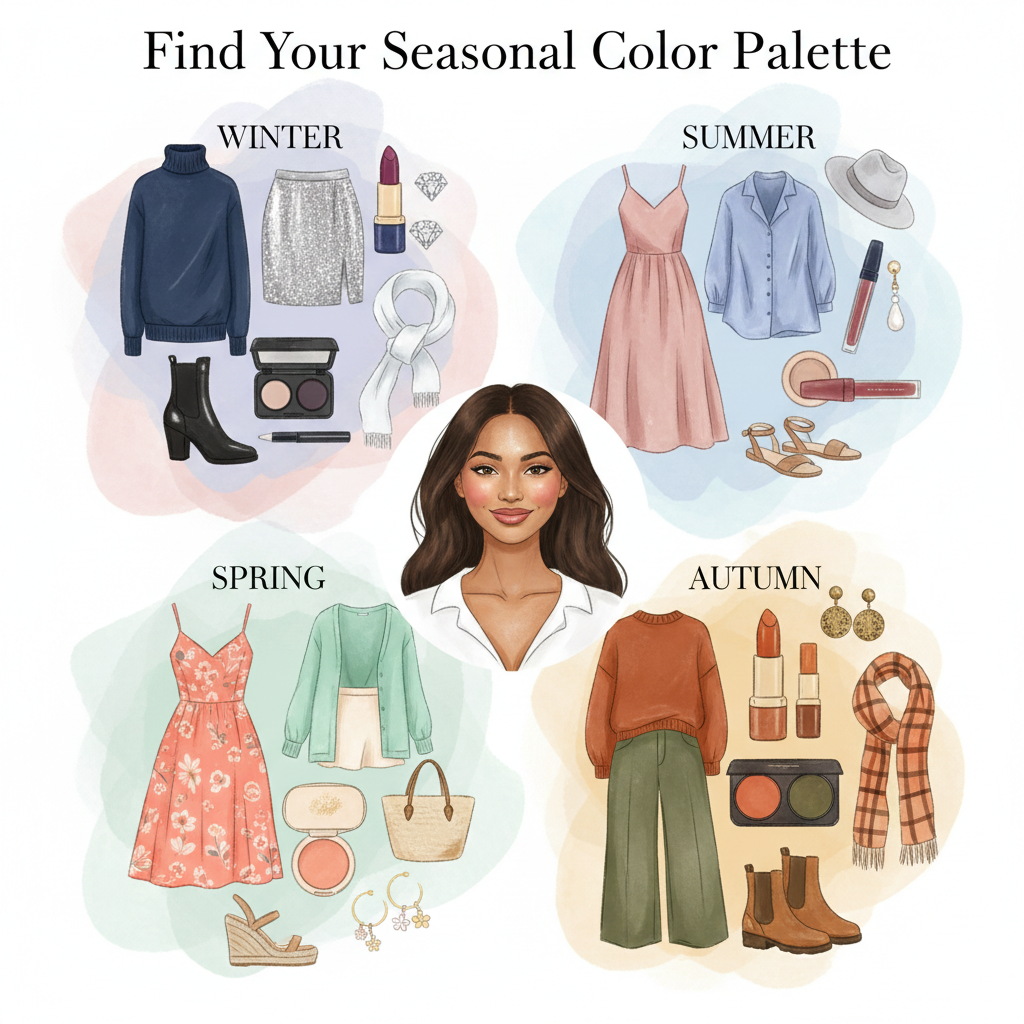
Illustration of a woman surrounded by four seasonal color palettes for Winter, Summer, Spring, and Autumn with matching clothing and makeup, showing how to find your perfect seasonal colors.

Find Your Season: A Simple, Stress-Free Guide to Your Best Colors

Ever stare into a closet full of clothes and still feel like you have nothing to wear? Or buy something you loved in the store, only to put it on at home and think, “Hmm… this doesn’t feel like me”?

You’re not alone. Most of us have been there. But what if the problem wasn’t your style—it was your colors?

The right colors don’t just look nice. They make your skin look brighter, your eyes pop, and give you this effortless “put-together” feeling. Finding them is simpler than you think, and it starts with knowing your season.


🌿 What is a Color Season, Really?

Think of it as your personal color family. Just like in nature, human coloring falls into four seasonal palettes:

  • ❄️ Winter: Cool, crisp, and bold. Like a starry night.
  • ☀️ Summer: Cool, soft, and gentle. Like a hazy seaside morning.
  • 🌸 Spring: Warm, bright, and fresh. Like sunlight through new leaves.
  • 🍂 Autumn: Warm, rich, and earthy. Like a forest in fall.

Your season is determined by your natural, unchanged features—your skin’s undertone, your hair, your eyes. It’s less about rules and more about harmony.


Step 1: The Golden (or Silver) Rule – Find Your Undertone

This is the biggest clue. Undertone is the subtle color beneath the surface of your skin. It doesn’t change with sun or season.

Quick Checks:

  1. Look at your veins on your inner wrist.
  • Blue/purple veins? You’re likely Cool.
  • Greenish veins? You’re likely Warm.
  • Can’t tell/see both? You’re likely Neutral.
  1. The jewelry test:
  • Silver makes you glow? → Cool
  • Gold lights you up? → Warm
  • Both look good? → Neutral

Step 2: See the Big Picture – What’s Your Contrast?

Look at your natural hair color, eye color, and skin tone together. Ignore makeup and dye for a second.

  • High Contrast: Think dark hair + fair skin, or very bright eyes against your complexion. This creates drama.
  • Low Contrast: Hair, skin, and eyes are closer in tone. Think soft blonde on fair skin, or medium brown on warm beige skin. This creates harmony.
  • Warm & Rich: There’s a golden, earthy warmth running through all your features.

Step 3: Put It All Together – Find Your Season

Use your two clues (Undertone + Contrast) like coordinates on a map:

You Are…Your Season Is…Your Colors Feel Like…
Cool + High Contrast❄️ WINTERBold, clear, and striking. Black, white, true red, icy blue.
Cool + Low Contrast☀️ SUMMERSoft, calm, and elegant. Lavender, dusty pink, soft gray, powder blue.
Warm + Bright/Clear🌸 SPRINGFresh, sunny, and lively. Coral, peach, light turquoise, warm green.
Warm + Deep/Muted🍂 AUTUMNCozy, rich, and earthy. Mustard, olive, rust, chocolate brown.

✨ Why Bother? (The Life-Changing Part)

When you wear your season’s colors, magic happens:

  • You look healthier and more rested (even when you’re not).
  • Getting dressed is faster and easier.
  • You shop smarter and waste less money on mistakes.
  • Makeup looks natural and flattering.
  • You feel more confident because you look authentically you.

It’s not about limiting your wardrobe—it’s about building one where everything works together and works for you.


🚀 Your Shortcut: Take the Quiz!

If you’re thinking, “This makes sense, but I’m still not 100% sure…”—that’s why we built our Free Seasonal Color Analysis Quiz.

It asks the right questions, connects the dots for you, and gives you a clear, personalized result in minutes. No guesswork. No stress.

👉 Ready to unlock your colors? Take the free quiz here.

Stop wondering which colors are yours. Start wearing them.

Color Analysis Quiz – Seriously, Stop Wasting Money on Clothes That Don’t Love You Back

Okay real talk: I once bought this gorgeous deep maroon shawl thinking it’d look killer with my black kurta. Wore it out on a chilly evening and my face become dull . People kept asking if I was okay. Turns out maroon (warm-leaning) was fighting my cool undertone hard. Lesson learned the expensive way.

That’s exactly why the free color analysis quiz exists on freecoloranalysisquiz.com. I made it because I was tired of guessing. Answer a handful of super simple questions—wrist veins, how gold vs silver sits on your skin, whether you burn or tan golden, eye sparkle level—and it tells you your season right away. Spring? Summer? Autumn? Winter? We even link to a 16 season color analysis quiz or 12 season breakdown if you want the nitty-gritty subtypes.

Once I figured mine out (spoiler: Summer with a soft lean), everything clicked. No more “this looks cute in theory but drains me in person.”

Why This Stuff Actually Matters

We chase trends—mustard everywhere in autumn, neons in summer sales—but half the time the color just doesn’t vibe with our skin. With our mix of warm golden tones in some folks and cooler rosy ones in others, plus the way humidity or dry air changes how makeup and clothes sit, wrong shades hit extra hard.

A good personal color analysis quiz cuts through that. It’s not about rules; it’s about harmony. Your natural coloring has a best-friend palette—wear it and people notice your smile first, not the outfit screaming for attention.

Folks who’ve tried ours say stuff like:

  • “Coral used to make me look sick—now I know it’s because I’m not Spring!”
  • “Switched to silver earrings and suddenly my face looks brighter.”
  • “Wardrobe feels intentional now instead of random chaos.”

Bonus: fewer shopping regrets, happier bank account, and yeah, random aunties at family functions going “you’re glowing these days.”

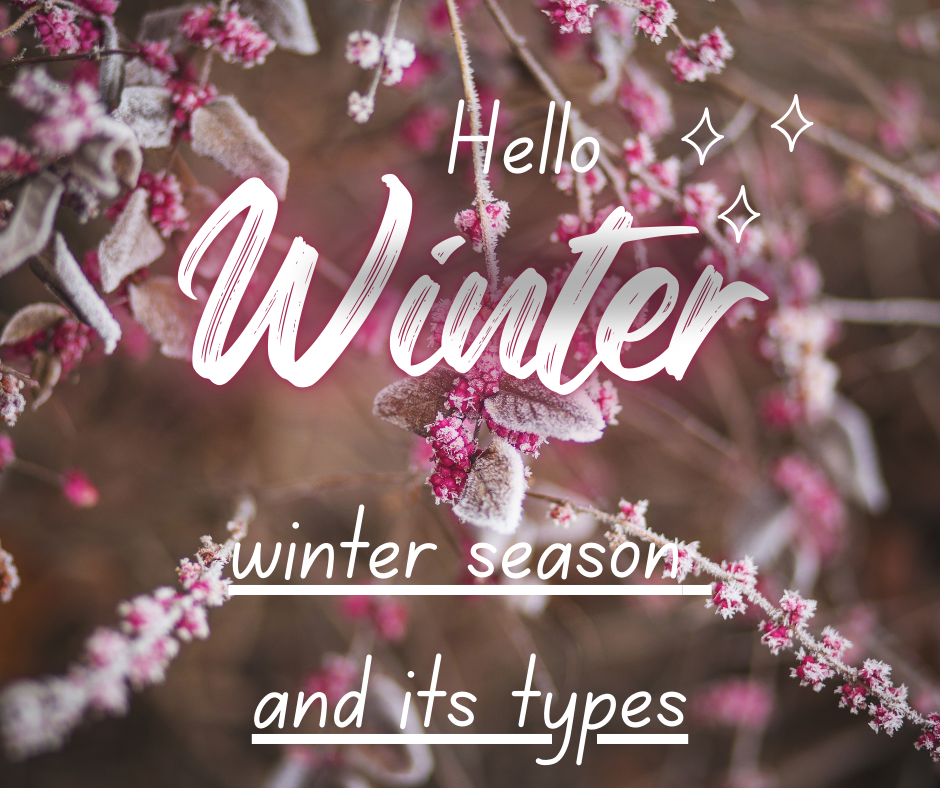
Winter season color analysis quiz cover featuring frosted branches with pink berries, cool muted tones, and ‘Hello Winter’ text, representing cool, deep, and high-contrast winter color palette types

How the Quiz Goes Down (No BS)

No photo upload needed (we’ve got a separate color analysis with photo guide if you prefer that). Just pick honestly:

  • Wrist veins green (warm) or blue/purple (cool)?
  • Tan golden brown or red then peel?
  • Hair warm caramel or ashy cool?
  • Eyes bright and clear or soft and blended?
  • Gold jewelry warms you up or silver makes you pop?

2–3 minutes tops. You get your season, why it fits, starter color ideas. If it doesn’t feel right, retake or check our tonal color analysis quiz, Korean personal color analysis quiz free test (big with K-drama fans), color analysis quiz TikTok version for quick vibes.

We’ve got niche ones too: mens color analysis quiz, womens, Caygill, Sci/Art, Elf cosmetics style, even 4×4 season. Post-quiz play with the color wheel, color palette quiz, or random color generator for fun.

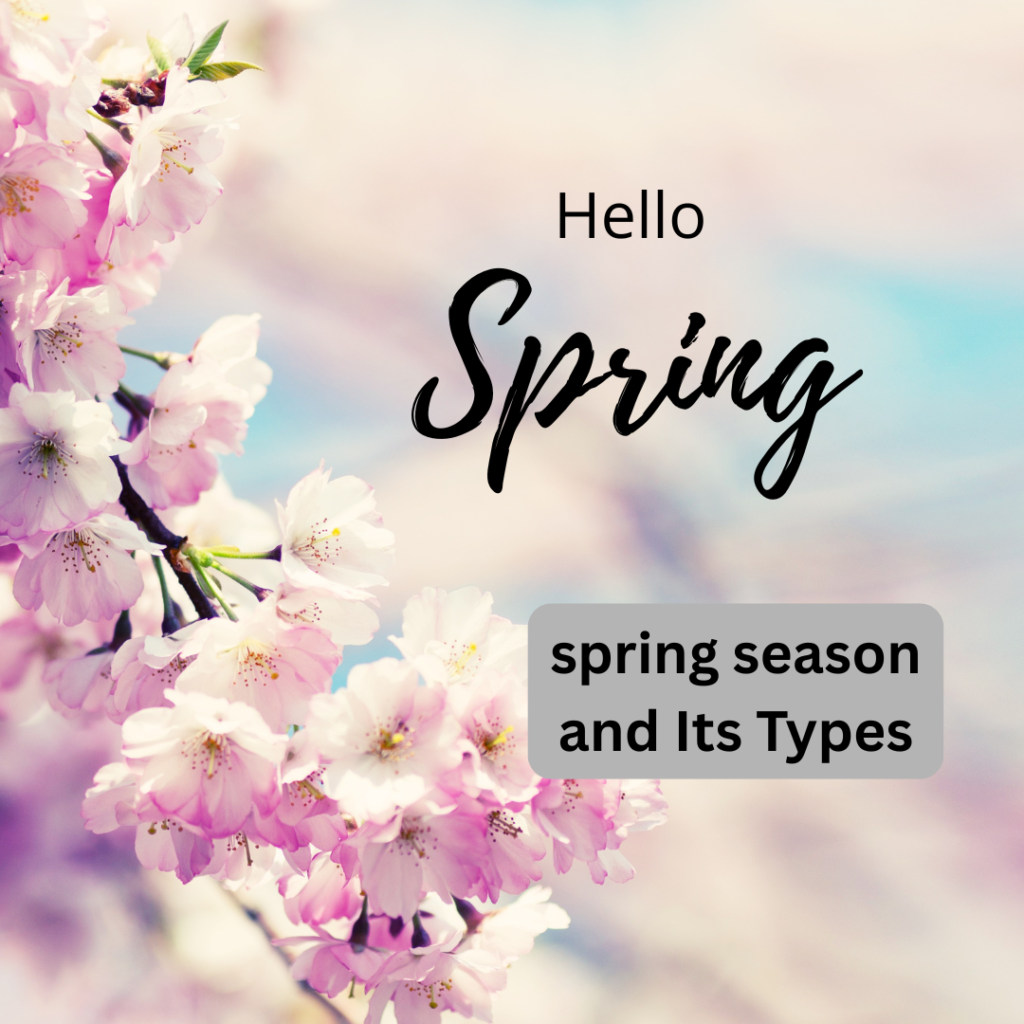
Spring season color analysis quiz featuring pink cherry blossoms, pastel spring colors, and floral background with ‘Hello Spring’ text. Image represents spring season types, fresh color palettes, and seasonal color analysis themes

The Four Seasons – Real-Life Twists

Winter High drama people—dark hair, fair skin, blue veins, eyes that stand out. True red lips and emerald dupattas against foggy views? Looks unreal. Go candy red, sapphire, crisp white, black, hot pink for Clear types. Skip mustard or rust; they dull you fast. Cool, Clear, Deep subtypes.

Spring Sunny warm glow—peachy/golden skin, lightish hair with gold threads, lively eyes. Soft coral lawn suit in spring light? Looks like the season itself. Try peach, mint, light aqua, ivory, camel. Black/navy can feel too heavy. Light (soft), Clear (bright), Warm (golden).

Summer Gentle cool elegance—rosy/neutral skin, ashy hair, blended soft features. July humidity? Bright warms make you look overheated. Lavender lawn, powder blue shalwar kameez, rose dupattas calm it all. Silver > gold. Black too stark—charcoal or navy better. Light (airy), Soft (muted dreamy), Cool (serene).

Autumn Rich warm earth—golden undertones, warm brown hair, deep eyes. Mustard kurta stroll in October? Feels right. Olive, terracotta, chocolate, burnt orange scarves against turning leaves. Icy pastels or stark white look off. Soft (cozy muted), True/Warm (golden), Deep (intense).

Summer season color analysis quiz cover featuring soft pink background, tropical green leaves, orchids, and pineapple surrounding a white circle with ‘Hello Summer’ text, representing light, cool, and fresh summer color palette

Easy Ways to Start (No Closet Purge Needed)

Grab one thing in your season’s color—a dupatta, lip tint, scarf. Test in real daylight (changing rooms lie). How do you feel? Do strangers say “you look so fresh”? That’s it working. Foggy days make cools look icier; humid gray makes warms feel cozier—experiment.

Still confused? Retake the self color analysis quiz or do DIY with stuff you own.

Random Extras We Threw In

Color wheel for mixing shades safely. Personality color analysis quiz for laughs. Colors that cause stress quiz—neon literally stresses some people out. First impressions and color—important meetings are brutal in 7 seconds.

We compare too: color me beautiful vs free color analysis quiz, Jen Thoden, etc.

Go take it already—the color analysis quiz is waiting on the homepage. Free. Quick. Life-changing maybe.

Tell me your result below or email—love swapping stories. Which color shocked you?

Your perfect shades are closer than you think.

Hello Autumn banner on Color Analysis Quiz website showcasing fall foliage and autumn color palettes, representing seasonal color analysis types and warm autumn tones used in personal color analysis.

👉 Discover your true seasonal palette with our Color Analysis Quiz and unlock styling, wardrobe, and makeup recommendations tailored to your natural undertone.

How to Determine Your Skin Undertone Once and For All

Let me tell you about the biggest mistake women make when choosing colors. They look at their surface skin color instead of their undertone. I made this mistake for years. I’d see a beautiful blush pink and think, “This matches my fair skin!” Then I’d put it on and look like a ghost.

Your skin has two components. The surface tone changes with sun exposure, tanning, or seasonal changes. But your undertone? That stays constant your entire life. Find your undertone, and you’ve found the key to your personal color palette.

The Three Undertone Categories

Cool Undertones: Your skin has hints of blue, pink, or reddish hues. You probably burn before tanning. Silver jewelry flatters you more than gold. Your wrist veins appear blue or purple. Celebrities with cool undertones include Anne Hathaway and Lupita Nyong’o.

Warm Undertones: Your skin has golden, peachy, or yellow hues. You tan easily and rarely burn. Gold jewelry makes your skin glow. Your wrist veins look greenish. Think Jennifer Lopez or Jessica Alba.

Neutral Undertones: You’re lucky – you have a balance of warm and cool. Both silver and gold look good on you. Your wrist veins might appear both blue and green. Neutral undertones mean more colors will work for you, but you still have a best palette within the seasonal system.

Simple Tests to Find Your Undertone

The White Shirt Test: Grab a pure white shirt and an off-white cream shirt. Hold them under your face in natural light. If pure white brightens you, you’re likely cool. If cream makes you glow, you’re warm. This test never lies.

The Jewelry Test: Gather silver and gold pieces. Hold silver near your face first, then gold. Notice which metal makes your skin look smoother and brighter. Which reduces dark circles? Which gets compliments? That’s your metal.

The Sun Reaction Test: Think about how your skin reacts to sun. Do you burn first, then maybe tan? Cool undertone. Do you tan deeply and rarely burn? Warm undertone. Do you burn then tan? Possibly neutral.

Why Undertone Matters for Color Analysis

Your undertone determines which colors harmonize with your natural beauty. Cool undertones need colors with blue bases – think true reds (not orange-reds), berry pinks, and emerald greens. Warm undertones need colors with yellow bases – coral, peach, olive green, and warm browns.

I worked with a woman who had beautiful dark skin but complained that bright colors overwhelmed her. We discovered she had neutral-cool undertones and needed slightly muted versions of cool colors. She replaced her fuchsia with deep berry and transformed her look.

Common Undertone Myths

Myth 1: Fair skin equals cool undertone. False! Fair skin can be warm (think strawberry blondes). Dark skin can be cool (think Viola Davis).

Myth 2: Yellow skin means warm undertone. Not necessarily – some yellow tones indicate olive skin, which can be cool or warm.

Myth 3: You need professional analysis to know your undertone. Professional analysis helps, but these simple tests will get you 90% there.

Ready to stop guessing and start glowing? Take our comprehensive skin undertone quiz. In under 3 minutes, you’ll know your undertone and which colors to embrace or avoid.

Wait, I’ve Been Wearing the Wrong Colors My Whole Life?

Okay so here’s the thing.

I used to think I just wasn’t good at getting dressed. You know that moment when you’re standing in front of your closet and everything looks wrong? That was me. Every single morning. I’d grab the same black shirt I always grabbed and just hope for the best.

Turns out the problem wasn’t me. It was my colors.

If you’re an Autumn type (and you might be, even if you don’t know it yet), you’ve probably been making the same mistake I made. So let me save you some time and money.


What Even Is an Autumn?

Think about October. The leaves are doing that thing where they turn gold and rust and deep red. The light gets all warm and golden. That’s the Autumn palette.

If this is you, your skin probably has warm undertones — like golden or peachy. Your eyes might have little gold flecks if you look close. Your hair could have red or copper hiding in it, even if it’s mostly brown.

But here’s where it gets interesting. Not all Autumns are the same.


The Three Kinds of Autumn

True Autumn

You’re the classic one. Medium contrast between your features — not super light and dark, just balanced. Your colors are the rich ones: pumpkin orange, warm olive, golden brown, mustard yellow.

My neighbor is a True Autumn. She wore black for like ten years straight. Then she bought a camel coat on a whim and suddenly she looked like she’d figured out some secret nobody else knew.

Soft Autumn

This one’s harder to spot. You’ve got the warmth but it’s softer. Lower contrast. And those really bright colors that look amazing on some people? They kind of wear you instead of the other way around.

My best friend is a Soft Autumn. She spent years trying to wear jewel tones because magazines said they were “flattering.” She always looked kinda tired. Then she switched to sage green and dusty rose and warm taupe. People started asking if she’d been on vacation. (She hadn’t.)

Deep Autumn

Dark hair, bright eyes, higher contrast. You can actually pull off some shades of black and those really deep colors — chocolate brown, forest green, burgundy.

My sister’s a Deep Autumn. She looks incredible in velvet and chunky knits. I try to wear the same colors and I look like a kid playing dress-up in my mom’s closet.


What Actually Works

Here’s what I wish someone had told me years ago.

For neutrals: Camel. Chocolate brown. Warm taupe. Olive green.

I know, I know. You’re looking at that list thinking “but I love my black clothes.” Same. But try swapping black for deep chocolate brown sometime. Look in the mirror. It’s softer and warmer and somehow just… better. You’ll see.

For power colors: Rust orange and pumpkin.

I avoided orange for years because I thought it was too loud. Like a traffic cone or something. Then someone handed me a rust-colored scarf at a workshop and I literally said “oh” out loud when I saw myself. My eyes looked brighter. My skin actually glowed. Now I own like three rust-colored things.

For accents: Mustard yellow. Moss green. Use them in bags or scarves or whatever. Just enough to add interest without going full Thanksgiving decoration.


Colors to Just… Stop Wearing

Look you don’t have to throw everything out. But some colors really fight with warm skin.

That powder blue sweater from the 90s? Makes Autumns look sick. Fuchsia? Hard no. Pure white is the sneaky one — it seems like it should work but it actually washes warm skin out. Cream or warm off-white will look way better.


Real Quick Story

I had this client a few years ago. Sweet woman, spent probably thousands on clothes, always felt like nothing looked right. She’d avoided orange her whole life. Thought it was too bold.

I draped a rust-colored scarf over her shoulder just to show her the difference between warm and cool. She grabbed my wrist and stared at herself in the mirror for like thirty seconds.

“Is that really me?” she kept asking.

It wasn’t just the color. It was seeing herself differently. Like putting on glasses for the first time.


Where to Start

If you think you might be an Autumn, here’s what I’d do:

Go through your closet. Pull out anything cool-toned — that powder blue, that fuchsia, that bright white. Just set it aside for now.

Buy one really good camel or chocolate brown coat. Just one. You’ll be surprised how many outfits it works with.

Get something rust-colored. Scarf, bag, whatever. Start wearing it near your face and see what happens.

Pay attention to how you feel. When you put on warm colors, do you feel like you’re wearing them — or are they wearing you? That gut feeling is usually right.


Bottom Line

There are quizzes out there for figuring out your exact Autumn type. But honestly?

Start with rust.

If rust makes you glow, you’re probably on the right track.