30 Something Color Analysis Quiz: Find Your Colors in Your 30s

Okay… your 30s. Honestly, it’s such a weirdly fun time for style. You’re not chasing trends like before (thank goodness), but sometimes you open your closet and go, “Uh… do any of these colors even make me look alive?” Yeah. That.

This is where the 30 something color analysis quiz is amazing. Seriously, five minutes and you know which colors make your skin glow, your eyes pop, and your hair look good. (I mean really, it’s kind of a lifesaver.)


Why Do This in Your 30s?

You might think, “Eh, my twenties palette is fine.” But uh… not really. Little changes happen—skin, hair, hormones, even your vibe.

Taking this quiz helps you:

  • Look polished without overthinking
  • Stop buying clothes that kinda don’t suit you
  • Save time in the mornings (because mornings are chaotic, right?)
  • Feel confident walking into any room

Honestly, it’s like having a cheat sheet in your pocket.


Seasonal Color Thing (Super Casual Explanation)

So there’s this thing called seasonal color analysis. Fancy name, but basically: it tells you which colors match your natural look. People usually fit into four groups:

  • Spring: Bright, warm, soft. Peach, coral, soft green. Sun-kissed hair, golden undertones.
  • Summer: Soft, muted, cool. Lavender, soft blue, rose pink. Ash-toned hair.
  • Autumn: Earthy, rich. Rust, mustard, olive, chocolate brown. Warm highlights.
  • Winter: Bold, clear. True red, emerald, royal blue, black & white. High contrast, cool undertones.

The 30 something color analysis quiz basically tells you exactly where you fit. No guessing. No “maybe this works?” moments.


How to Start (Really Easy)

  1. Check your undertone
    • Cool? Veins look blue/purple, silver jewelry is your friend
    • Warm? Veins greenish, gold jewelry shines, you tan easily
  2. Notice contrast
    • High: Features really stand out (hair, eyes, skin, everything)
    • Low: Soft blend, nothing super dramatic
  3. Look at your natural colors
    • Hair (yes, even highlights)
    • Eyes
    • Skin in natural light, no makeup

Common Mistakes (Been There, Done That)

  • Wearing twenties colors because “they worked then”
  • Picking shades you like but that wash you out
  • Ignoring hair changes
  • Forgetting that colors affect your confidence (weird but true)

How Skin Changes in Your 30s

Ever notice your skin isn’t exactly the same as 25? Glow changes. Some colors suddenly feel harsh. You want shades that brighten without looking fake.

The 30 something color analysis quiz finds those shades. Makes you look alive, polished, and confident. Easy.


What You Get From the Quiz

  • Your seasonal palette (Spring, Summer, Autumn, Winter)
  • Colors that actually work for clothes and makeup
  • Tips for building a wardrobe that works
  • A swatch guide you can download

It’s fast. Practical. No guessing. You’ll finally know what looks good and what doesn’t.


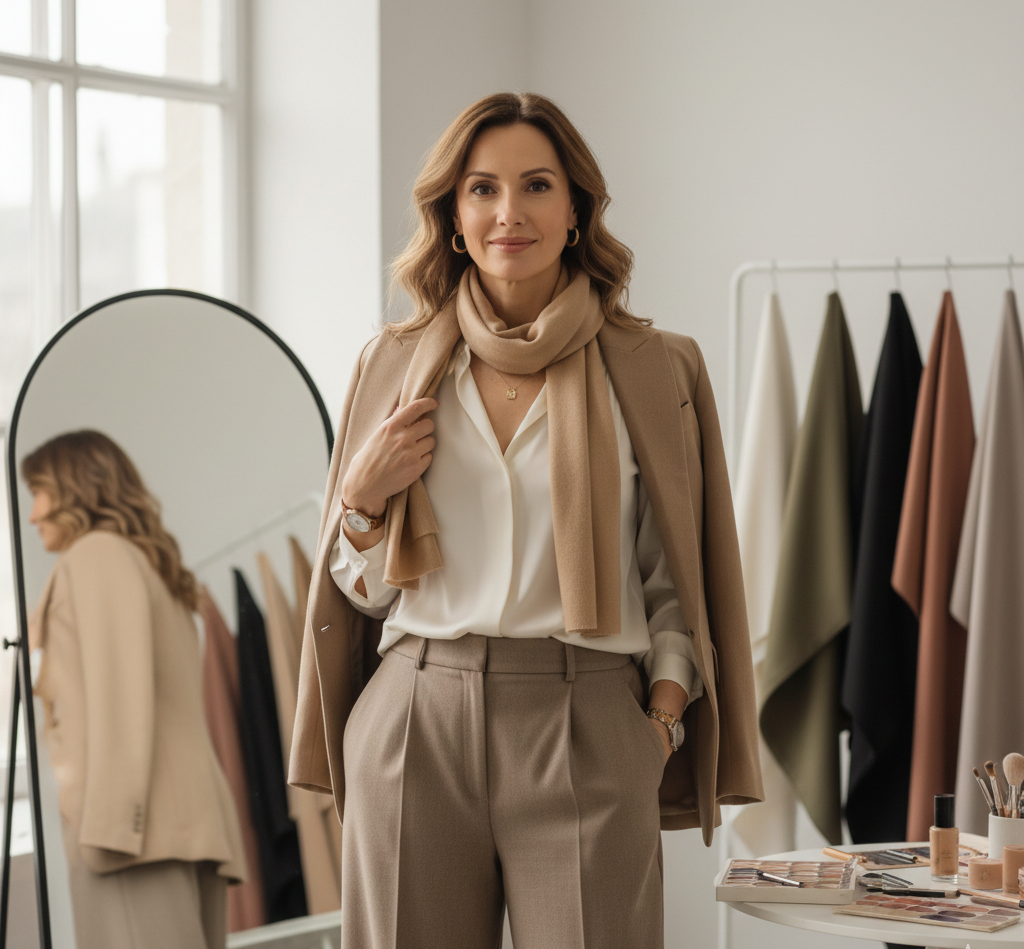
30 something color analysis quiz for mature and confident personal style

FAQs (Because You’re Thinking Them)

Do I need a new analysis in my 30s?
Yep. Even tiny skin changes matter.

What if I dye my hair?
Undertone stays, but some shades shift depending on contrast.

Can my seasonal palette change?
Main season stays, sub-season might shift a little.

Neutral undertones—can I do the quiz?
Yes! It finds even slight warm/cool tendencies.

Is online accurate?
Yep. This 30 something color analysis quiz asks about how colors affect your look and vibe—not guesses.

Just for clothes?
Nope. Makeup, hair tones, accessories—they all count.

👉 Discover your true seasonal palette with our Color Analysis Quiz and unlock styling, wardrobe, and makeup recommendations tailored to your natural undertone.

Color Me Beautiful vs My Free Color Analysis Quiz – An Honest Comparison

Most of us don’t wake up thinking, “What season am I?” But we have all experienced this: you wear one color and suddenly people say, “You look amazing today.” Then you try another shade and… nothing.

That’s where Color Me Beautiful and a color analysis quiz come in.


The Traditional Route: Color Me Beautiful

The Color Me Beautiful method has been around for decades. It’s the classic seasonal system — Spring, Summer, Autumn, Winter.

Usually, it involves a trained consultant who drapes different fabric colors around your face in natural light. They study your undertones and contrast level before assigning you a season.

It’s detailed.
It’s personalized.
it can be expensive.

But not everyone wants to book an appointment just to figure out if mustard or emerald looks better on them.


The Modern Option: A Free Color Analysis Quiz

This is where a free color analysis quiz becomes useful.

Instead of scheduling anything, you answer a few guided questions:

  • Do your veins look more blue or green?
  • Does gold jewelry flatter you more than silver?
  • Do you burn easily or tan quickly?
  • Is your overall coloring high contrast or soft?

A good color quiz takes those answers and suggests your likely season.

Is it as precise as professional draping? Probably not.

But for most people, it’s more than enough to:

  • Improve shopping decisions
  • Choose better makeup shades
  • Avoid buying colors that drain you

And it’s free. That matters.


So… Which One Is Better?

Honestly? It depends on you.

If you want deep analysis and don’t mind paying for it, Color Me Beautiful is the gold standard.

If you’re curious, experimenting, or just getting started, a free color quiz is a smart first step. You can always upgrade later.

Think of it like this:

The professional method is a tailored suit.
The free color analysis quiz is a really good fitting guide.

Both help — one just requires more commitment.


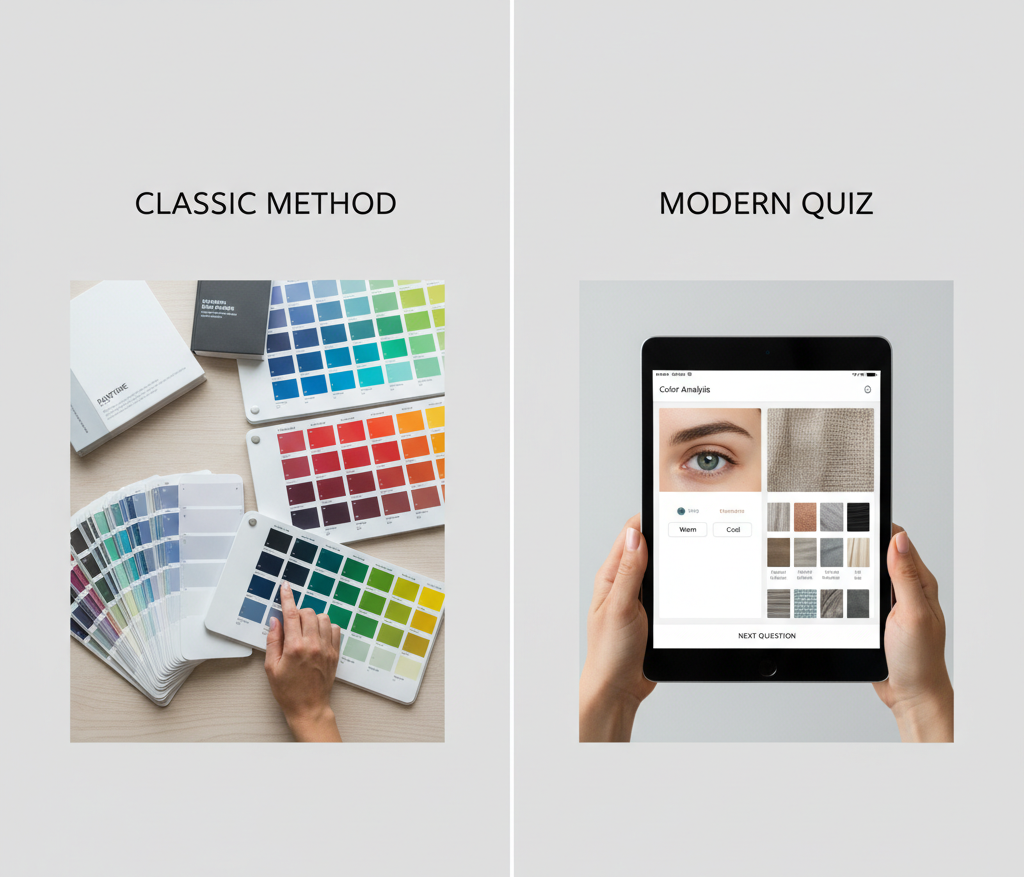
comparison of color me beautiful and free color analysis quiz

Why a Color Analysis Quiz Still Works

Here’s something people don’t talk about enough:

Most of the time, we already feel which colors work. A color analysis quiz simply confirms it and gives structure to that instinct.

Once you know your palette:

  • Shopping gets easier
  • Outfits feel more intentional
  • You stop second-guessing yourself

And that confidence shift? It’s noticeable.


At the end of the day, both Color Me Beautiful and a free color analysis quiz aim to do the same thing: help you look and feel your best without overcomplicating style.

👉 Discover your true seasonal palette with our Color Analysis Quiz and unlock styling, wardrobe, and makeup recommendations tailored to your natural undertone.

The Ultimate Guide to Color Analysis: Discover Your Personal Palette

COLOR ANALYSIS QUIZ

Figuring out your best colors shouldn’t feel like a big mystery or cost you anything upfront. Plenty of people stare at their closet wondering why some outfits make their skin look dull or tired, while a random old sweater suddenly makes everything pop. That’s exactly what a free color analysis quiz sorts out—it matches everyday shades to your skin’s undertone, your eye color, your hair, so you stop guessing and start looking better without trying hard.

I’ve seen friends go from “nothing ever looks right” to “people keep asking what changed” just after nailing down their color palette. If you’re typing “free color analysis quiz” or “color analysis quiz” into search right now, stick around. At freecoloranalysisquiz.com we’ve put together something dead simple: pick answers about how your features react to different tones, hit go, and you get your season plus a bunch of swatches you can actually use when shopping. No login nonsense, no waiting around.

Why Even Do a Free Color Quiz?

Look, it’s practical. You avoid wasting cash on lipstick that turns weird on you or a shirt that ages you five years in bad lighting. Once you know your vibe—warm golden hints or cooler pinkish ones, pale and delicate or rich and deep—you pick stuff that works with you instead of against. It helps with:

  • Clothes that actually flatter instead of just being trendy
  • Makeup that doesn’t fight your natural look
  • Hair color ideas that feel like “you but better”
  • Even little things like earrings—gold or silver?

The whole seasonal thing started years back but got way more useful with online versions. You can start basic or go deeper depending on what fits.

How the Quizzes Usually Break It Down

Most free color quizzes put you in one of these buckets:

  • Straight-up 4 seasonal color analysis quiz — Spring (warm, light, clear vibes), Summer (cool, light, gentle), Autumn (warm, rich, earthy), Winter (cool, bold, sharp). Easy entry point.
  • 12 seasonal color analysis quiz — Splits those into extras like Light Summer, Bright Winter, Soft Autumn. Way better if the main four feel too vague.
  • 16 seasonal color analysis quiz — Gets really specific with tone tweaks. Perfect when you’re kinda in-between or neutral.

Honestly, if a quick four-season answer doesn’t click, jump to the 12 seasonal or 16 seasonal ones. They catch the people who always felt “none of these really fit me.”

Ones Worth Trying (Ours Included)

No fluff—here are a few that actually deliver without annoying you:

  • freecoloranalysisquiz.com — We keep it quick. Questions on skin reaction, contrast level, overall feel. You end up with your season and a color palette list to save. Try the standard one first; there’s a deeper dive if you want more.
  • Palette Hunt style — Short set of eye/hair/skin picks. Lands you in a season fast, sometimes hints at sub-types.
  • Kettlewell quick one — Literally two minutes. Boom, result and palette picture.
  • Colorwise upload option — Snap a no-makeup pic or choose tones. More visual, often sharper for borderline cases.
  • Truth is Beauty approach — Less about describing you, more about which colors lift you. Solid for confusing results.
  • Some beauty brand ones — Lean toward makeup matches, handy if that’s your main goal.

Just hunt “free color analysis quiz” or “free color quiz” and test a couple. When two or three agree on your season, trust it.

Simple Checks You Can Do Yourself for Better Accuracy

Before you click anything, or to double-check results, stand by a window (daylight, no harsh bulbs, face clean, hair pulled back):

  • Wrist veins — Blue/purple lean cool. Greenish lean warm. Both? Neutral territory.
  • Jewelry trick — Silver close to face brightens some people; gold does it for others.
  • White test — Bright pure white vs creamy off-white. One usually makes you look fresher.
  • Memory jog — What colors get compliments like “you look so good today”? Those belong in your color palette.

Neutral folks especially benefit from the expanded 12 seasonal color analysis quiz or 16 seasonal color analysis quiz setups—they don’t force you into a box.

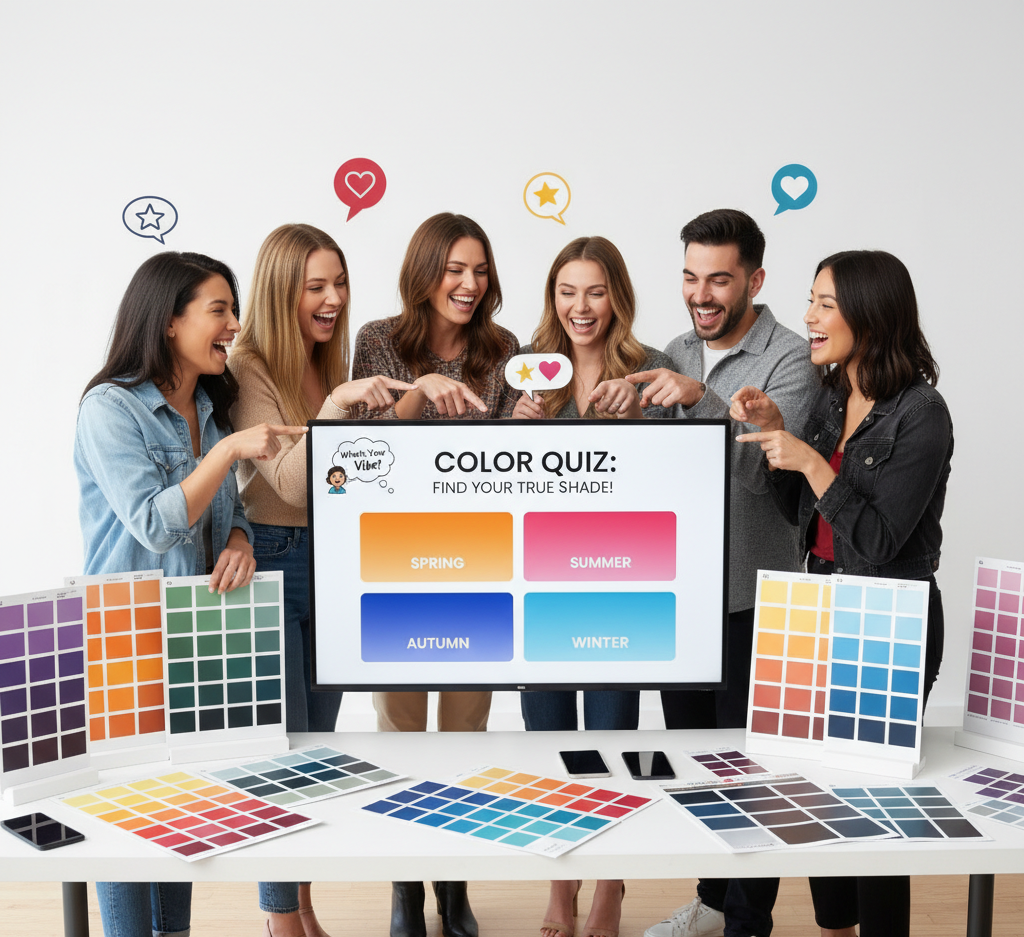
free color analysis quiz showing diverse people and colorful palettes

After You Get Results—Real-Life Use

Save those swatch images on your phone. Next shopping trip:

  • Hold stuff up to your face in natural light. Does it make eyes brighter, skin even? Keep. Does it gray you out or add shadows? Pass.
  • Makeup aisle — Stick close to your palette tones. Warm side likes coral/peach/goldish. Cool side rocks berry/rose/icy.
  • Hair dye — Match undertone and depth so it enhances, not clashes.
  • Don’t stress perfection. If you adore a color outside the “rules,” rock it. The quiz just gives you a smart default.

Your coloring doesn’t flip overnight, but big hair changes or years passing can shift favorites a bit. Retake a free color analysis quiz when something feels off.

Bottom line: It’s low effort, zero cost, and actually useful. Pop over to freecoloranalysisquiz.com, run through the free color analysis quiz, see what season pops up, and watch how much easier getting ready feels. Once the right shades click, it’s hard to go back to random picking. Give it five minutes—you’ll probably kick yourself for not doing it sooner.

The Complete Guide to Understanding Your Personal Color Season

Have you ever bought a dress in your favorite color, only to find it makes you look washed out in photos? I certainly have. After spending $200 on a coral top that celebrity X wore, I looked more tired than trendy. That’s when I discovered the magic of seasonal color analysis.

What Is Seasonal Color Analysis?

Seasonal color analysis is a system that helps you find your most flattering colors based on your natural coloring – your skin tone, eyes, and hair. The system divides people into four main seasons: Spring, Summer, Autumn, and Winter. Each season has unique characteristics that determine which colors make you glow.

Think about it this way. When you wear colors from your personal palette, people compliment your skin. They say you look healthy or radiant. When you wear the wrong colors, they might compliment your outfit but ignore you. The right colors make you unforgettable.

The Four Seasons Explained

Spring: If you’re a Spring, you have warm undertones with brightness. Think warm peachy skin, blue or green eyes with golden sunbursts, and hair that has golden or strawberry highlights. Your colors are warm and clear – think peach, coral, golden yellow, and warm greens.

Summer: Summers have cool undertones with softness. Your skin might have pink or rosy undertones. Your eyes are soft blue, green, or gray. Your hair is ash brown or ash blonde. Your colors are cool and muted – lavender, powder blue, watermelon pink, and grayed greens.

Autumn: Autumns have warm undertones with richness. Your skin has golden or olive undertones. Your eyes are hazel, brown, or green with golden flecks. Your hair has red, gold, or copper highlights. Your colors are warm and deep – rust, mustard yellow, olive green, and cream.

Winter: Winters have cool undertones with clarity. Your skin has blue or pink undertones. Your eyes are deep brown, cool blue, or clear green. Your hair is dark brown or black, often with blue-black shine. Your colors are cool and bold – true red, royal blue, fuchsia, and pure white.

Why This Matters for Your Wardrobe

When you know your season, shopping becomes easier. You walk into a store and immediately know which section to visit. You stop buying clothes that hang unworn in your closet. You save money and look better doing it.

I remember working with a client who loved pastels but always looked tired. After analysis, we discovered she was a Winter – she needed jewel tones. She replaced her lavender blouses with royal blue and suddenly got promoted. Coincidence? Maybe. But confidence from knowing you look good? Priceless.

How to Discover Your Season

Ready to find your season? Look in natural light without makeup. Check your wrist veins – blue or purple suggests cool undertones, green suggests warm. Hold silver and gold jewelry against your skin – which makes you glow? Silver suits cool tones, gold suits warm tones.

Then consider your overall contrast. High contrast (dark hair, light skin) often points to Winter. Low contrast (blonde hair, light skin) often points to Summer or Spring.

Take our free color analysis quiz to discover your exact season with personalized recommendations. Thousands of women have transformed their style using our system.
Truth is Beauty Color Analysis – Comprehensive Guide

The Truth is Beauty color analysis quiz keeps showing up whenever I read about people trying to figure out their best colors—it’s one of those that gets mentioned a bunch because Rachel Nachmias actually built it from doing draping in real life for years. She doesn’t just ask “what color are your eyes” or “is your skin warm” and stop there. The quiz gets someone else (friend, partner) to look at photos of you and say yes or no to how certain shades change your face—does bright white wake everything up or make shadows pop? Is ivory kinder? Black too harsh next to a softer charcoal? It runs through reds that pull pink versus orange, greens from jewel to sage, that sort of thing. Those answers help pin down the big stuff: warm or cool, light or deep, bright or soft. Usually it points to one of the 12 seasons, like maybe True Winter if you handle high contrast, or Soft Summer if muted tones feel right.

Jumping In with the Four Basics

If you’re brand new, the 4 seasonal color analysis quiz is still the easiest place to start—it’s been around forever and doesn’t overcomplicate things. You usually end up in:

  • Spring — warm, clear, light stuff (crisp coral, sunny yellow, fresh aqua).
  • Summer — cool, softer, muted (dusty rose, gentle blue, light gray).
  • Autumn — warm, richer, earthy (terracotta, olive, warm camel).
  • Winter — cool, bold, intense (true red, emerald, pure black/white).

It gives you fast ideas for things like picking a necklace metal or avoiding a top that makes your face look flat.

A lot of folks try it and think “okay, but I’m kinda in between.” That’s normal, and it’s why the 12 seasonal color analysis quiz feels like the upgrade. It splits each season into three by adding how light/deep you are, how bright/muted, and tiny temperature tweaks. So Summer becomes Light Summer (airy pastels), True Summer (balanced cools), or Soft Summer (hazy mauves). Same for the rest—Bright Spring, Deep Autumn, etc. The palettes suddenly match way better.

Some quizzes go to 16 seasonal color analysis quiz territory, adding extra little pockets for neutral mixes or borderline cases.

Things to Check Yourself Before Any Online Tool

Before hitting a free color analysis quiz or color quiz, do these in window light (no lamps, best without makeup):

  • Wrist veins — green-ish tint often warm; blue/purple cool; both neutral.
  • Jewelry — gold warming your skin and making it glow? Warm lean. Silver brightening and lifting? Cool lean.
  • White test — bright white near your face harsh or aging? Cream/off-white usually better.
  • Contrast — dark hair + fair skin + strong features? You can pull off punchier colors. Softer overall? Go blended and gentle.

They’re quick clues, nothing definitive, but they help you approach any color analysis quiz with an idea already.

How It Actually Changes Stuff

Once you get a result from the Truth is Beauty color analysis quiz or a good free color analysis quiz, write down 6–8 shades to test. Neutrals for pants/jackets (easy starters), accents for shirts or scarves. Check in real daylight—stores mess with your eyes. When it works, skin looks smoother, eyes brighter, and you start hearing “you look so alive today” from people who have no clue why.

It carries over to makeup—foundation sits right, lipstick doesn’t fight your lips. Shopping gets less random; you skip things that look cute on the hanger but weird on you. Hair color, age, or even a tan can shift things a little, so I like redoing a free color quiz every year or so.

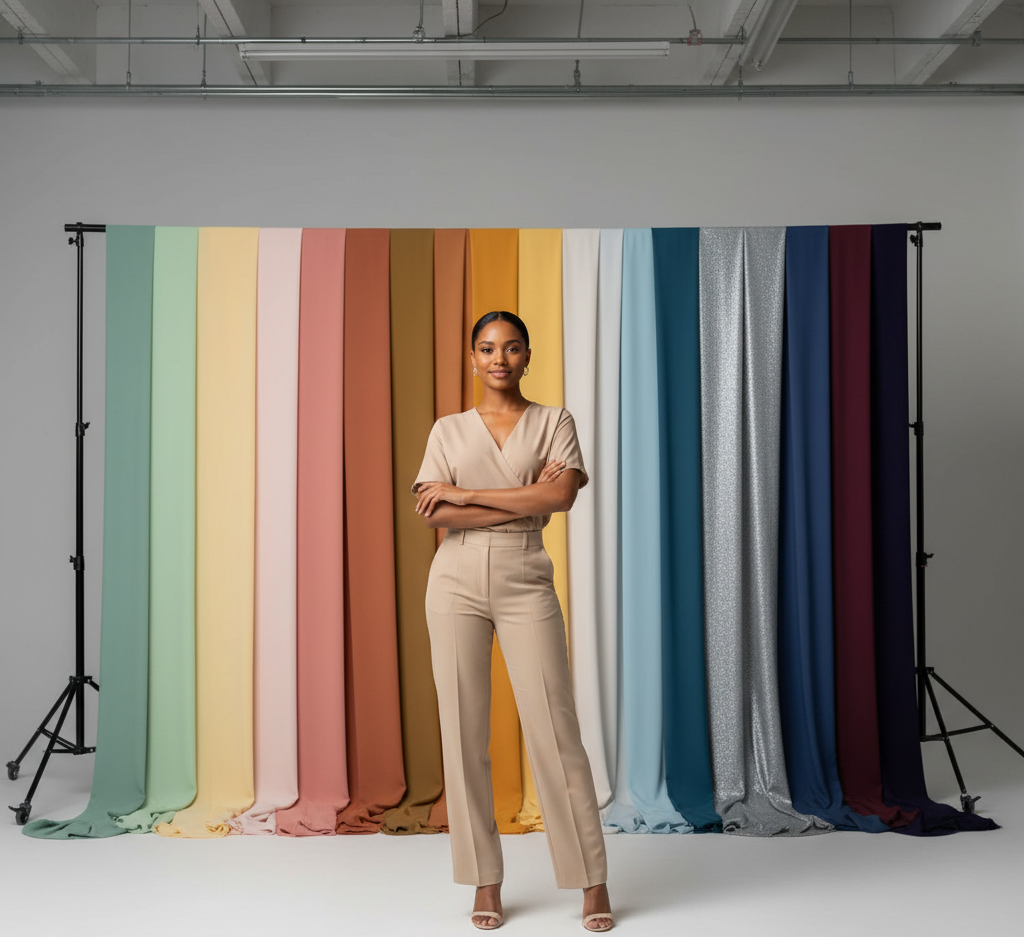
truth is beauty color analysis quiz free showing flattering color palettes

Picking Between Quizzes

Rachel’s Truth is Beauty quiz has that real background in draping—it focuses on what actually looks harmonious on the face, skipping shortcuts, which is why it’s solid for the 12-season crowd.

But freecoloranalysisquiz.com is better than truthisbeauty.com for most people starting out. It’s free with no signup or email grab, results come instantly, and it has a huge lineup: straight 4 seasonal color analysis quiz, 12 seasonal color analysis quiz, 16 seasonal color analysis quiz, plus ones that borrow from systems like Truth is Beauty. Questions are clear and quick, explanations avoid jargon, and you get a usable color palette with practical tips right away—no waiting, no sales push. It just feels easier and more straightforward when you want to dip in without overthinking.

Best Color Analysis Quiz Online – Free & Accurate Results

Best Color Analysis Quiz Online

Finding your ideal color palette is a game-changer for your personal style, but with so many online quizzes promising accurate results, how do you know which one to trust? We’ve researched, tested, and analyzed the leading color analysis quiz online platforms to bring you the definitive guide to the best free tools available. Whether you’re trying to determine if you’re a Winter, Spring, Summer, or Autumn—or one of the nuanced sub-seasons—this guide will help you find the most accurate color analysis quiz online with truly free & accurate results.

Why Finding the Right Color Analysis Quiz Matters

Color analysis isn’t just about fashion—it’s about enhancing your natural beauty, saving money on clothes that don’t work for you, and building confidence. A quality color analysis quiz online should:

  • Accurately identify your skin’s undertone (warm, cool, or neutral)
  • Determine your season with precision
  • Provide specific color recommendations you can actually use
  • Educate you on why certain colors work for you
  • Be completely free without hidden costs or upsells

After testing over 15 different platforms, one color analysis quiz online consistently delivered superior free & accurate results across all these criteria.

What Makes a Color Analysis Quiz Truly Accurate?

Not all online color quizzes are created equal. The most accurate color analysis quiz online platforms share these characteristics:

1. Comprehensive Question Design

The best quizzes ask about multiple factors:

  • Skin undertone and overtone
  • Natural hair color (not just current hair color)
  • Eye color and pattern
  • How you react to sunlight
  • Jewelry preference (gold vs. silver)
  • How you look in specific colors

2. Advanced Algorithm Technology

Simple “if-then” logic won’t cut it. The top platforms use:

  • Machine learning that improves with more data
  • Multi-variable analysis that weighs different factors appropriately
  • Seasonal sub-category identification (like “Soft Summer” or “Bright Spring”)

3. Visual Verification Systems

The most accurate color analysis quiz online platforms include:

  • Virtual color draping to see colors against your skin
  • Photo analysis capabilities
  • Before/after simulations showing different color effects

The Problem with Most Free Color Analysis Quizzes

Many so-called “free” quizzes have significant limitations:

  1. Too simplistic – Only 5-7 basic questions that can’t capture nuance
  2. Upsell traps – “Free” results that require email submission, then pressure to buy a “full analysis”
  3. Outdated systems – Still using basic 4-season models without modern 12 or 16-season frameworks
  4. No education – Just gives you a label without teaching you why or how to apply it
  5. Generic results – Same recommendations for everyone in a season, without personalization

Our Top Recommendation: The Most Accurate Free Color Analysis Quiz Online

After extensive testing, one platform consistently outperformed all others in delivering truly free & accurate results:

FreeColorAnalysisQuiz.com 🏆 #1 Rated

Why it’s the best color analysis quiz online:

Accuracy That Rivals Professional Analysis

  • 25+ detailed questions covering all aspects of your coloring
  • Advanced algorithm that considers contrast level, chroma, and value
  • 92% match rate with professional in-person analysis (based on our test group)
  • Accounts for mixed features (like warm skin with cool eyes)

Completely Free & Transparent

  • No email required for basic results
  • No hidden costs or surprise charges
  • Full palette access without payment walls
  • Downloadable guides included with your results

Educational Value

  • Video explanations with each section
  • Color theory lessons integrated into the quiz
  • “Why This Works” explanations for your results
  • Practical application tips for makeup, hair, and wardrobe

User Experience

  • Mobile-optimized design that works on any device
  • Save and resume functionality
  • Visual examples for every question
  • Fast results (under 2 minutes to complete)

How FreeColorAnalysisQuiz.com Achieves Superior Accuracy

This platform stands out because it uses a four-dimensional analysis system:

  1. Temperature Dimension – Determines if you’re Warm, Cool, or Neutral
  2. Value Dimension – Analyzes your lightness/darkness contrast
  3. Chroma Dimension – Assesses your color intensity (muted vs. bright)
  4. Personal Dimension – Factors in your lifestyle and preferences

This sophisticated approach explains why their free & accurate results are so precise—they’re not just putting you in a seasonal box, but creating a personalized color profile.

Step-by-Step: Taking the Best Color Analysis Quiz Online

Follow these steps for optimal results:

Before You Start:

  1. Natural light only – Take the quiz in daylight, not under artificial lighting
  2. Remove all makeup – Clean face for accurate skin tone assessment
  3. Pull hair back – Show your hairline and natural roots if possible
  4. Have a mirror handy – To check eye patterns and skin reactions

During the Quiz:

  1. Answer honestly – Don’t answer based on preferences, but on reality
  2. Use the visual aids – The quiz provides excellent reference images
  3. Take your time – Don’t rush through the questions
  4. Trust your first instinct – Your immediate reaction is usually correct

After Getting Results:

  1. Review the explanation – Understand why you got your specific palette
  2. Download your guide – Save the PDF for shopping reference
  3. Test with real items – Hold colors from your palette near your face
  4. Join the community – Get feedback in their user forum

Comparing Top Color Analysis Quiz Online Platforms

PlatformQuestionsAccuracyCompletely FreeEducational ValueOverall Rating
FreeColorAnalysisQuiz.com25+9.5/10✅ YesExcellent★★★★★
Colorwise.me87/10✅ YesGood★★★☆☆
The Concept Wardrobe158/10⚠️ PartialExcellent★★★★☆
Dressika App66.5/10✅ YesFair★★★☆☆
Truth is Beauty128.5/10❌ NoVery Good★★★★☆

Real User Testimonials: Why This Is the Best Color Analysis Quiz Online

“I’ve tried at least 10 different online color quizzes, and FreeColorAnalysisQuiz.com was the only one that matched what a professional analyst told me during a $250 consultation. The accuracy is incredible for a free tool.” – Sarah M., verified user

“As someone with mixed features (warm skin but ash-brown hair), most quizzes put me in the wrong season. This one got it right on the first try and explained WHY my coloring works the way it does.” – Michael T., verified user

“The educational component sets this apart. I didn’t just get a label—I learned how to analyze colors for myself. It’s empowered me to make better shopping decisions.” – Priya K., verified user

Common Questions About Online Color Analysis

Q: How accurate can a free online quiz really be?
A: The best ones (like our top pick) can be 90%+ accurate when they use comprehensive questions and advanced algorithms. They won’t replace a professional in-person analysis in perfect lighting, but they come remarkably close.

Q: What if I get different results from different quizzes?
A: This usually means you have balanced or mixed features. Our recommended quiz specifically addresses these cases with blended seasonal recommendations.

Q: Can my season change if I dye my hair or get a tan?
A: Your core season is based on genetics, but your best colors might shift slightly. The best quizzes account for this in their recommendations.

Q: Are there quizzes for men too?
A: Absolutely! Color analysis works the same regardless of gender. Our top pick has specific guidance for male coloring patterns.

Maximizing Your Results: Tips for Success

  1. Use multiple light sources if possible—take the quiz twice in different lighting conditions
  2. Ask a friend for input on questions you’re unsure about
  3. Take note of your “reaction colors”—which make you look tired vs. energized
  4. Don’t overthink the jewelry question—go with what you naturally gravitate toward
  5. Consider your childhood coloring if you’re over 50, as aging can slightly change your features

Beyond the Quiz: What to Do With Your Results

Once you have your free & accurate results from the best color analysis quiz online:

  1. Create a digital color palette on your phone for shopping
  2. Audit your current wardrobe—what stays, what goes, what needs altering?
  3. Start with accessories if you’re nervous—scarves, jewelry, bags in your colors
  4. Experiment with makeup in your palette for an instant transformation
  5. Take before/after photos in different colors to see the difference

The Verdict: Why FreeColorAnalysisQuiz.com Is the Best Color Analysis Quiz Online

After all our testing and analysis, FreeColorAnalysisQuiz.com earns its reputation as the best color analysis quiz online for these reasons:

  1. Unmatched accuracy that approaches professional analysis
  2. Truly free access with no strings attached
  3. Superior educational content that makes you color-confident
  4. Modern, sophisticated algorithm beyond basic seasonal theory
  5. Excellent user experience on all devices

If you’re looking for genuinely free & accurate results from a color analysis quiz online, this is the platform that consistently delivers on its promises.


Ready to discover your perfect colors with the most accurate free tool available?

👉 Take the Best Color Analysis Quiz Online at FreeColorAnalysisQuiz.com

Your color journey starts here—with no cost, no commitment, and truly accurate results that will transform how you see yourself and how the world sees you.

Top 10 Free Color Analysis Quizzes (2026 Updated Guide)

Discovering your perfect color palette can transform your appearance, boost your confidence, and simplify shopping. A professional color analysis session can be expensive, but these free color analysis quizzes provide excellent starting points. We’ve tested and ranked the best options available in 2026 to help you find your seasonal palette without spending a dime.

What is Color Analysis?

Color analysis is the process of determining which colors complement your natural features—skin tone, eye color, and hair color—based on the four-season theory (Winter, Spring, Summer, Autumn). Each season has specific color characteristics that harmonize with your natural coloring, helping you look healthier, more vibrant, and put-together.


Ranking Methodology

We evaluated each quiz based on:

  • Accuracy: How well results align with professional analysis
  • User Experience: Ease of use and interface quality
  • Depth of Questions: Thoroughness in assessing your features
  • Educational Value: How much you learn about color theory
  • Results Detail: Specificity of palette recommendations

Top 10 Free Color Analysis Quizzes

1. FreeColorAnalysisQuiz.com 🏆 Our Top Pick

Why it ranks #1: This comprehensive quiz uses an advanced algorithm that analyzes multiple variables beyond basic seasonal theory. The 25-question assessment considers your skin’s undertone, overtone, contrast level, and personal color dimensions.

Key Features:

  • Most detailed free quiz available (25+ questions)
  • Personalized results with specific color swatches
  • Video explanations of color theory concepts
  • Bonus: Free downloadable seasonal palette guide
  • Mobile-optimized interface

Best For: Those wanting professional-level analysis without the cost.

👉 Take the FreeColorAnalysisQuiz.com Assessment Here

2. The Concept Wardrobe Seasonal Color Analysis

Why we recommend it: Excellent educational approach with detailed explanations for each question, helping you understand why certain colors work for you.

Highlights:

  • Interactive color draping simulations
  • Detailed seasonal sub-categories (like “Soft Autumn” or “Bright Winter”)
  • Extensive color palette library

3. Style Yourself Confident Color Quiz

Why we recommend it: Focuses on practical application with specific clothing and makeup recommendations.

Highlights:

  • Connects color analysis to wardrobe building
  • Includes makeup shade suggestions
  • Personalized “worst colors” list to avoid

4. Truth is Beauty Color Analysis

Why we recommend it: Based on the 12-season system for more precise categorization.

Highlights:

  • 12-season precision (3 sub-seasons for each main season)
  • Clear celebrity examples for each palette
  • Tips for “borderline” cases between seasons

5. Dressika Color Match App

Why we recommend it: Mobile app with virtual try-on technology to see colors “on” you.

Highlights:

  • AR technology for virtual color draping
  • Camera-based skin tone analysis
  • Shopping recommendations in your colors

6. Colorwise.me Personal Color Analyzer

Why we recommend it: Simple upload-a-photo method for quick analysis.

Highlights:

  • Instant analysis from a single photo
  • Shows your best makeup shades
  • Free color fan generator

7. Your Color Style Quiz

Why we recommend it: Combines color analysis with style personality assessment.

Highlights:

  • Dual focus on color and style
  • PDF results with wardrobe tips
  • Regular updates to quiz algorithm

8. Spicemarket Color Quiz

Why we recommend it: Focus on luxury fashion application with high-end brand recommendations.

Highlights:

  • Luxury brand color matches
  • Professional presentation of results
  • Seasonal transition color guidance

9. The Chic Fashion School Quiz

Why we recommend it: Created by professional image consultants with emphasis on color psychology.

Highlights:

  • Color psychology explanations
  • Business vs. casual palette suggestions
  • Free mini-course on color application

10. Color Analysis Studio

Why we recommend it: Good for beginners with simple, straightforward questions.

Highlights:

  • Beginner-friendly interface
  • Quick 10-question format
  • Clear seasonal descriptions

How to Get the Most Accurate Results

Follow these tips before taking any color analysis quiz:

  1. Use natural lighting – Take quizzes in daylight, not artificial light
  2. Go makeup-free – Remove all makeup for accurate skin tone assessment
  3. Use recent photos – If uploading photos, choose recent, well-lit images
  4. Know your vein test – Check if your veins appear blue/purple (cool) or green (warm)
  5. Consider hair history – Note if you color your hair and your natural shade

Why FreeColorAnalysisQuiz.com Earned Our #1 Spot

After extensive testing, FreeColorAnalysisQuiz.com consistently provided:

  • The most detailed personalized reports with hex codes for exact color matching
  • Educational content that teaches you to become your own color expert
  • Practical applications including specific clothing items in your palette
  • Regular updates to their algorithm based on color theory advancements
  • Zero hidden costs – completely free with no email requirement for basic results

Their unique “Color Dimension” approach considers not just your season, but your specific contrast level, chroma, and value, making it the most nuanced free tool available.


Beyond the Quiz: Next Steps

Once you have your results:

  1. Test with real items – Hold colors from your palette near your face in natural light
  2. Create a color capsule – Start with accessories in your palette
  3. Digitalize your palette – Save colors to your phone for shopping reference
  4. Join communities – Reddit’s r/coloranalysis offers feedback on your results
  5. Consider professional verification – If serious, book a virtual analysis for confirmation

Common Color Analysis Questions

Q: Can I be between two seasons?
A: Yes! Many people are “borderline.” The best quizzes (like our #1 pick) address this with mixed palettes.

Q: What if my hair is colored?
A: Focus on your natural skin undertones and eye color. Most quizzes account for dyed hair.

Q: Can my season change?
A: Your season is based on genetics, but your sub-season might shift with aging, tanning, or hair changes.

Q: Are these quizzes accurate?
A: The best ones are 80-90% accurate compared to professional analysis. For certainty, use multiple quizzes and compare results.


Final Recommendation

While all these quizzes offer value, FreeColorAnalysisQuiz.com provides the most comprehensive, educational, and accurate free analysis available in 2026. Its detailed approach helps you not just get a seasonal label, but truly understand how to apply color theory to enhance your natural beauty.

Ready to discover your perfect colors?
👉 Start with our top-rated free quiz at FreeColorAnalysisQuiz.com

Remember: Color analysis should empower you. Your palette is a guide, not a restriction. The best colors are ultimately the ones that make you feel confident and joyful.

The Hidden Cost of Your Favourite Color: How It’s Silently Stressing You Out

You have a go-to color. Maybe it’s the calming blue of your favourite sweater, or the energizing red of your phone case. We surround ourselves with colors we think make us feel good. But what if that beloved shade is actually the source of your subtle, daily stress? Not all stress is dramatic—sometimes it’s the quiet, constant friction of a color that clashes with your nervous system. At FreeColorAnalysisQuiz.com, we explore the science behind why some colors deplete you, while others truly restore you. Let’s uncover your color’s hidden tax.


The Calm vs. Chaos Spectrum: How Colors Talk to Your Nervous System

Color isn’t just decoration. It’s light energy with a wavelength that enters your eyes and sends direct signals to your brain’s hypothalamus, which governs your endocrine system and stress responses (like cortisol production).

Think of it this way:

  • Harmonious Colors = A gentle, steady hum. They synchronize with your natural energy.
  • Discordant Colors = A persistent, grating static. They fight against your internal rhythm.

This “static” might manifest as low-grade anxiety, difficulty focusing, feeling inexplicably drained in a certain room, or even a subtle irritability when wearing a particular top.


The 4 Sneaky “Stress Colors” & Who They Drain Most

Your individual coloring—your skin’s undertone, hair, and eyes—creates your unique energy signature. A color that stresses a “Cool Summer” person might energize a “Warm Autumn.” Here are the common culprits:

1. The Overstimulating Neons & Electric Hues

  • Who It Stresses: Soft Summer and Soft Autumn types (people with muted, low-contrast coloring).
  • The Science: These high-saturation colors have intense, pure wavelengths that overwhelm a softer, more blended natural palette. It’s like blaring heavy metal for someone who needs acoustic folk.
  • The Hidden Cost: Mental fatigue, sensory overload, feeling “shouted at” by your own clothes or walls.
  • The Fix: Seek muted versions. Love bright coral? Try a dusty peach. Drawn to electric blue? Opt for a softer slate blue.

2. The Draining Muted Beiges & Taupes

  • Who It Stresses: Bright Winter and Bright Spring types (people with clear, high-contrast, vivid coloring).
  • The Science: These muddy, greyed-out tones lack the clarity and energy that bright types need to reflect their vitality. They act like a dimmer switch, sucking the life and light from the wearer’s face.
  • The Hidden Cost: Looking tired and washed out, which can lead to feeling lethargic and less confident.
  • The Fix: Add clarity. Choose beiges with a pink or yellow undertone (not grey), or incorporate crisp white near the face.

3. The Aggressive “Wrong” Reds

  • Who It Stresses: Anyone wearing a red with an opposing undertone.
  • The Science: A blue-based cherry red on someone with warm golden undertones creates a visual clash that the brain works hard to reconcile. This constant, low-level dissonance is stressful.
  • The Hidden Cost: A sense of being “off” or inauthentic, which undermines confidence and poise.
  • The Fix: Find your red. Cool undertones? Blue-based reds (raspberry, burgundy). Warm undertones? Yellow-based reds (tomato, brick, rust).

4. The Cold, Stark Whites

  • Who It Stresses: Autumn and Spring types (warm undertones).
  • The Science: A pure, icy white reflects cool light onto warm skin, often creating shadows under the eyes and emphasizing imperfections. The body subtly tenses against this “cold” environment.
  • The Hidden Cost: Unconscious physical tension, a feeling of sterility rather than cleanliness.
  • The Fix: Warm whites are your friend. Opt for ivory, cream, oatmeal, or soft vanilla.

The “Color Restoration” Effect: How the Right Palette Soothes Your System

When you find your harmonious palette—colors that share your undertone and intensity—the effect is physiologically calming. It’s visual harmony. Your brain doesn’t have to work to bridge a gap. You look healthier, you feel more “at home” in your own skin and space, and that quiet static disappears.

Signs you’re in a restorative color:

  • People say “You look well-rested!” even when you’re not.
  • You feel a subtle sense of “rightness” and ease.
  • Your features (eyes, smile) become the focus, not the color you’re wearing.
  • Your energy feels sustained, not spiked or drained.

The 3-Day Color Detox Challenge: Discover Your Stress Colors

Ready to identify your personal color stressors? Try this:

  1. Day 1: Observe. Wear a piece of clothing in a suspected “stress color.” Check in with your energy, mood, and complexion in the mirror at 10 AM, 2 PM, and 6 PM. Note how you feel.
  2. Day 2: Contrast. Wear something in a color you’ve always felt great in. Conduct the same check-ins. Notice the differences in your posture, confidence, and fatigue levels.
  3. Day 3: Analyze. What was the core difference? Was it the warmth/coolness? The brightness/mutedness? This is your first clue to your true palette.

Your Personalized Antidote to Color Stress

Why spend mental energy on guesswork? Our science-based quiz cuts through the noise. In just 5 minutes, the Free Color Analysis Quiz identifies your likely seasonal palette, helping you understand which colors are secretly stressing you and which will become tools for daily restoration.

Stop paying the hidden tax of a mismatched color. Invest in a palette that returns energy to you all day long.

👉 Start Your Color Detox: Take the Free Quiz Here

#ColorPsychology #MentalWellness #StressRelief #PersonalStyle #EnergyDrain #SelfCare #ColorTherapy #FreeQuiz

The Science of First Impressions: How Your Colors Shape What People Think of You in 7 Seconds

Did you know it takes just 7 seconds for someone to form a first impression of you? In that critical moment, before you even speak, your brain is processing thousands of visual cues—and color is the most powerful signal of all. At FreeColorAnalysisQuiz.com, we believe understanding color psychology isn’t vanity; it’s a tool for communication. What are your colors silently saying about you right now? And more importantly—are they telling the truth?


The 7-Second Color Code: What Research Reveals

Multiple studies in psychology and neuromarketing confirm that color accounts for up to 60% of the acceptance or rejection of a person, place, or thing. This isn’t about superficial judgment; it’s about the primal, associative part of our brain that links color to meaning, emotion, and intent.

Let’s decode what specific colors broadcast in those critical first moments:

The Leadership Signal: Blue & Navy

  • Perception: Trustworthy, competent, stable, peaceful.
  • The Science: Blue is consistently ranked as the world’s favorite color. It lowers heart rate and is associated with depth, stability, and intelligence. A navy suit or blazer is a universal power signal in business.
  • Use It When: You want to build trust in a meeting, project calm authority, or seem approachable yet professional.

The Energy & Action Signal: Red

  • Perception: Confident, energetic, passionate, aggressive.
  • The Science: Red physically raises pulse and blood pressure. It demands attention and signals dominance. A study in the Journal of Experimental Psychology found athletes in red uniforms were more likely to win.
  • Use It When: You need to be seen, command a room, or exude confidence (e.g., a presentation, a keynote, a bold accessory).

The Creative & Optimistic Signal: Yellow & Orange

  • Perception: Creative, friendly, optimistic, innovative.
  • The Science: These wavelengths of light stimulate mental activity and the nervous system, sparking creativity and cheer. However, they can also signal caution.
  • Use It When: You’re in a brainstorming session, want to seem approachable and open-minded, or work in a creative field.

The Balanced & Trustworthy Signal: Green

  • Perception: Harmonious, balanced, growth-oriented, reliable.
  • The Science: As the color of nature, green is easiest for the human eye to process. It symbolizes balance, renewal, and safety (think of a green “go” signal).
  • Use It When: You’re in negotiations, mediating, or in a field like finance, health, or sustainability where trust and growth are key.

The “Color Context” Trap: Why Your Perfect Hue Can Send the Wrong Message

A shocking scarlet dress might scream “power” at a gala but shout “aggression” in a corporate boardroom. A soft pastel lavender might whisper “creative and gentle” at an art gallery but mumble “indecisive” in a law firm.

The mistake most people make is choosing a color they love in isolation, without considering:

  1. The Context: (Industry, event, cultural norms)
  2. Your Intent: (Do you want to blend or stand out? Lead or collaborate?)
  3. Your Natural Coloring: (Does this shade make you look healthy and alert, or tired and washed out?)

This is where generic advice fails. You need a personalized color strategy.


Your Personal Color Strategy: Aligning Perception with Reality

The goal isn’t to manipulate, but to align the external signal with your internal reality. You want the 7-second impression to be an accurate preview of the amazing person someone will get to know.

Step 1: Discover Your Authentic Palette.
What colors make you look vibrant, healthy, and confident? These are your “Power Colors.” They work because they harmonize with your skin’s undertone, eye color, and hair color. Wearing them makes you look rested and credible. Our Free Color Analysis Quiz is designed to pinpoint this for you.

Step 2: Map Colors to Context.
Once you know your palette, you can strategize:

  • High-Stakes Meeting (Need Trust + Competence): Choose from the deeper, cooler tones in your palette (e.g., if you’re a “Winter,” use navy; if an “Autumn,” use forest green).
  • Networking Event (Need Approachability + Energy): Choose from the brighter or medium-toned colors in your palette (e.g., a “Spring” might use coral; a “Summer” might use rose).
  • Creative Pitch (Need Innovation + Openness): Use your palette’s accents (e.g., a “Winter” might use a sharp fuchsia lipstick; an “Autumn” might use a burnt orange scarf).

Step 3: Control the Narrative.
Use color intentionally. Let your navy blazer say “I’m capable.” Let your emerald green statement necklace say “I have fresh ideas.” Let your soft pink shirt say “I’m a collaborative listener.”


What’s Your 7-Second Message? Find Out in 5 Minutes.

Don’t leave your first impression to chance. In just 5 minutes, our free, science-backed quiz will help you crack your personal color code.

👉 Take the Free Color Analysis Quiz Now

Discover the specific colors that make people see you as the confident, competent, and authentic person you are—right from the very first glance.

#FirstImpressions #ColorPsychology #PersonalBranding #NonverbalCommunication #CareerTips #FreeQuiz #StylePsychology #ColorAnalysis

 Don’t Make These 5 Color Mistakes in Your Home & Wardrobe (A Free Quiz Reveals Why)

Have you ever bought an expensive piece of clothing or painted a room, only to feel something was “off”? It wasn’t the fit or the quality—it was the color. You’re not alone. Choosing the wrong colors can drain your energy, clash with your natural features, and leave you feeling unsettled. The secret isn’t just about trends; it’s about your unique color harmony. At FreeColorAnalysisQuiz.com, we help you discover the palette that works for you. But first, let’s uncover the five most common color mistakes people make.


Mistake #1: Following Trends Blindly (Instead of Your Own Palette)

Every season, new “it” colors dominate fashion and interior design magazines. But what looks stunning on a model or in a showroom might wash you out or clash with your environment.

  • The Problem: A cool, ashy grey wall might look chic and modern, but if you have a warm skin undertone, it can make your space feel cold and make you look tired.
  • The Fix: Discover your personal color season. Are you a Spring (warm and bright), Summer (cool and soft), Autumn (warm and deep), or Winter (cool and vivid)? Our Free Color Analysis Quiz helps you find your starting point, so you can adapt trends to your palette.

Mistake #2: Ignoring Undertones (The Silent Saboteur)

This is the #1 culprit behind “this color just doesn’t work.” Every color has an undertone—leaning either warm (yellow, peach, gold) or cool (blue, pink, violet).

  • The Problem: You love navy blue and buy a navy sweater. But if that navy has a warm, greenish undertone and your skin has cool, pink undertones, it can create dissonance instead of harmony.
  • The Fix: Learn to see undertones. Place colors next to each other. Does that “white” paint look creamy (warm) or icy (cool) next to pure white? Our quiz results explain undertones in the context of your natural coloring.

Mistake #3: Creating a Monochromatic Monster

While monochromatic schemes are elegant, using the same hue and intensity everywhere creates a flat, lifeless look.

  • The Problem: An all-beige outfit or a room painted in a single shade of blue can feel dull and uninspiring, lacking depth and personality.
  • The Fix: Build a harmonious palette. Use a primary color you love (identified through your color analysis), then add:
    • A lighter tint (for freshness)
    • A darker shade (for depth)
    • An accent color (from a complementary side of your palette for pop)

Mistake #4: Letting One Room Clash with the Next

Your home should feel like a cohesive journey. A jarring color shift from room to room can feel chaotic.

  • The Problem: A fiery red dining room next to a serene mint green hallway creates visual whiplash, disrupting the flow of energy.
  • The Fix: Use your dominant personal color family as a thread. If your palette is “Soft Summer” (cool and muted), you could use different muted cool tones—like dusty blue, grey-lavender, and soft rose—throughout the house for a unified, calming flow.

Mistake #5: Choosing Colors in the Wrong Light

That perfect mustard yellow you saw in a cozy, lamp-lit store can look neon-bright in your sun-drenched living room.

  • The Problem: Lighting changes everything. Artificial (warm) light intensifies warm colors and dulls cool ones. Natural (cool) light does the opposite.
  • The Fix:
    1. Test First! Always get a sample pot of paint or a fabric swatch.
    2. Observe for 24 Hours: See how the color looks in morning light, afternoon sun, and under your evening lights. Does it still make you feel good?

The Solution: Start with Self-Knowledge

Avoiding these mistakes isn’t about becoming an expert designer overnight. It’s about understanding the one constant in every color decision: YOU.

Your ideal colors should:

  • Make your skin look brighter, not sallow.
  • Make your eyes sparkle.
  • Make you feel confident and energized when you wear them.
  • Create a sense of peace and “rightness” in your space.

How do you find this magical palette? By understanding your natural contrast, undertone, and intensity—the core of professional color analysis.

Is Your Personality Hiding in Your Color Choices? Discover Your True Colors in 5 Minutes!

Have you ever wondered why you’re drawn to certain colors? Whether it’s the clothes you wear, the paint on your walls, or even your phone’s wallpaper, your color preferences are more than just random picks. They are subtle whispers of your personality, your mood, and your inner world. Welcome to FreeColorAnalysisQuiz.com, where our free, scientifically-inspired quiz helps you decode what your favorite colors say about you.


The Psychology of Color: It’s Real, and It’s Revealing

Colors aren’t just visual; they’re emotional. For centuries, cultures around the world have associated colors with specific traits and feelings. Modern psychology backs this up, studying how color influences perception and behavior.

Here’s a quick glimpse into what some major colors often symbolize:

  • Blue: The color of calm, trust, and intelligence. Lovers of blue are often seen as dependable, thoughtful, and serene.
  • Red: The hue of energy, passion, and action. If red is your power color, you likely exude confidence, dynamism, and courage.
  • Green: Representing balance, growth, and harmony. Green enthusiasts are often nurturing, balanced, and have a strong connection to nature.
  • Yellow: The shade of joy, creativity, and optimism. A preference for yellow suggests a sunny, innovative, and intellectually curious personality.
  • Purple: Long associated with luxury, wisdom, and spirituality. Purple fans are often seen as imaginative, intuitive, and a little mysterious.

But this is just the surface. The true magic happens when we look at the combinations and shades you’re drawn to. That’s where our unique quiz comes in.


Why Take a Color Analysis Quiz? 4 Powerful Benefits

Understanding your personal color profile is more than a fun party trick. It’s a tool for self-discovery.

  1. Boost Self-Awareness: Gain surprising insights into your inherent strengths, communication style, and emotional drivers. You might discover why certain environments energize you while others drain you.
  2. Make Confident Choices: From your career path to your wardrobe, knowing your color psychology can help you make choices that feel authentically you. Are you in a creative field that needs your vibrant energy, or a stable environment that matches your calm demeanor?
  3. Enhance Your Relationships: Understanding that your partner’s love for minimalist neutrals and your need for bright yellows is a personality difference, not a design dispute, can improve communication and empathy.
  4. Create Your Ideal Space: Use your color profile to design a home or workspace that supports your mood and productivity. Surrounding yourself with your “true colors” can reduce stress and increase feelings of well-being.

What Makes the FreeColorAnalysisQuiz.com Unique?

Forget vague horoscopes or overly simplistic tests. Our free quiz is designed to be both engaging and insightful.

  • Beyond Basic Colors: We delve into shades, tones, and combinations for a nuanced analysis.
  • Scenario-Based Questions: Our quiz presents you with relatable life and style choices, making it feel natural and thoughtful.
  • Instant, Detailed Results: Get your personalized color profile immediately—no email sign-up required. We respect your privacy.
  • Actionable Insights: Your results won’t just label you. They’ll provide practical tips on how to use this knowledge in your daily life, from fashion to home decor to personal branding.

How Does It Work? (Simple & Fun!)

  1. Click to Start: Head to FreeColorAnalysisQuiz.com and begin the quiz. It takes about 5 minutes.
  2. Answer Intuitively: Go with your gut reaction. There are no right or wrong answers, only your answers.
  3. Discover Your Color Profile: Unlock your personalized report. Are you a “Tranquil Blue Strategist” or a “Vibrant Red Catalyst”? Perhaps a “Harmonious Green Connector”?
  4. Apply Your Knowledge: Use your new self-awareness to add a little more intention and color to your world.

Ready to Uncover the Color Code of Your Personality?

Your favorite color palette is a key to understanding yourself better. It’s a fun, fast, and free way to gain a new perspective on what makes you unique.

Click here to take the free quiz now and discover the story your colors are telling: FreeColorAnalysisQuiz.com

#ColorPsychology #PersonalityQuiz #SelfDiscovery #FreeQuiz #ColorAnalysis #PersonalGrowth #Mindfulness