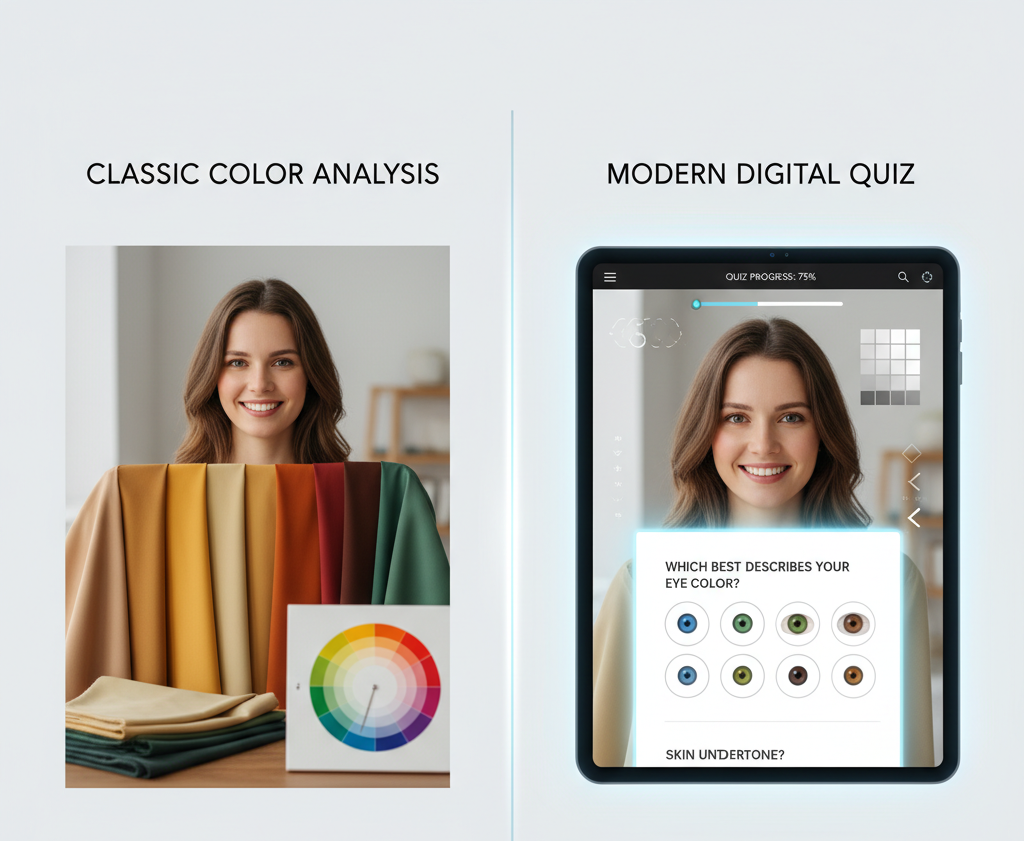
Let me be honest with you. The first time I took a color analysis quiz online, I got three different answers from three different websites and ended up more confused than when I started. Spring? Autumn? Soft Summer? I had no idea what any of it meant, and I definitely did not understand why it mattered which colors I wore.
But here is the thing. Once I actually learned how to take a color analysis quiz properly and understand the results, everything changed. Getting dressed stopped feeling like a guessing game. I stopped buying clothes I never wore. And people kept telling me I looked more “put together” without me doing anything differently except wearing the right colors for my season.
So if you are sitting there wondering how to figure out your color season, this is the post I wish I had found first.
What Is a Color Analysis Quiz, Really?
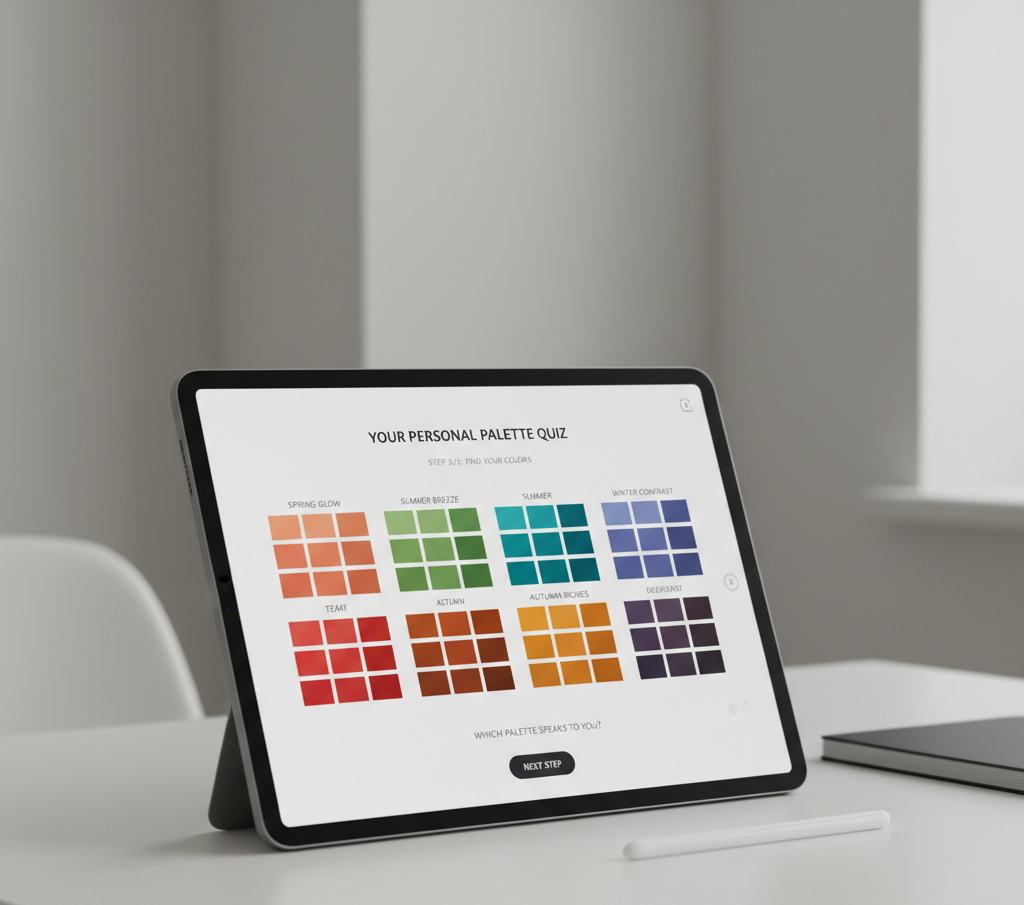
A color analysis quiz is a tool that helps you figure out which of the four seasonal color palettes, Spring, Summer, Autumn, or Winter, best matches your natural coloring. That means your skin tone, hair color, and eye color all working together.
The concept comes from a system developed in the 1980s, most famously by Carole Jackson in her book “Color Me Beautiful.” It was built on the idea that everyone’s natural coloring has an undertone and a depth, and certain colors will either bring your face to life or make you look washed out and tired.
Color analysis is not about telling you what colors you like. It is about identifying which colors make you look your most vibrant, healthy, and awake without trying.
The Four Seasons Explained Simply
Before you even touch a quiz, you need to understand what you are actually being sorted into.
Spring is warm and light. Spring people tend to have peachy or golden skin, light golden or strawberry blonde hair, and eyes that are green, hazel, or light brown. The Spring palette is full of warm, fresh, clear colors like coral, peach, warm ivory, and golden yellow.
Summer is cool and soft. Summer people usually have pink or rose-tinted skin, cool blonde or ash brown hair, and blue, grey, or soft hazel eyes. The Summer palette leans toward muted, dusty tones like lavender, rose, soft teal, and powder blue.
Autumn is warm and deep. Autumn people often have golden, olive, or bronze skin, rich auburn, chestnut, or dark brown hair, and warm brown, hazel, or green eyes. The Autumn palette is earthy and rich, think terracotta, olive, mustard, burnt orange, and deep camel.
Winter is cool and deep. Winter people tend to have high contrast coloring with cool or neutral skin, dark brown or black hair, and striking dark or clear blue and green eyes. The Winter palette is bold and saturated, true red, icy pink, navy, black, and pure white.
Why Most Color Analysis Quizzes Get It Wrong
Here is something nobody talks about enough. A lot of free color analysis quizzes online are oversimplified to the point of being almost useless. They ask you “what is your hair color” and give you four options when the reality is that hair color has warm, cool, and neutral undertones that matter just as much as the shade itself.
The biggest reasons people get wrong results from color analysis quizzes are these.
They answer based on their current hair color instead of their natural hair color. If you have dyed hair, you need to think back to what it looked like before, or look at childhood photos.
They confuse their surface skin tone with their undertone. You might have tan skin but a cool undertone, which would still put you in a cool season. The surface color is not the whole story.
They take the quiz under bad lighting. Warm yellow lighting will make everything look more golden than it is. Natural daylight is the only lighting that will not trick your eye.
They overthink the questions. A lot of people answer the way they want to be rather than what they actually see. If you wish you had warm coloring because you love the Autumn palette, you might unconsciously lean your answers that way.
How to Take a Color Analysis Quiz and Actually Trust the Results
Okay, so here is how to do this properly. Follow these steps and you will get a much more accurate result than if you just sit down and start clicking.
Step 1 – Prepare Yourself Before You Start
Wash your face and remove all makeup. I know, I know. But your foundation, blush, and bronzer are all influencing the way your skin looks and they will throw off your answers. The quiz needs to see your actual skin.
Pull your hair back. If your hair is around your face it will affect how you perceive your skin tone. Tie it back or cover it with a white or grey headband.
Sit in front of a window during the day. Natural daylight is the most neutral light source you have access to. Avoid doing this at night under artificial lighting if you can help it.
Step 2 – Look at the Right Things When Answering
When a quiz asks about your skin tone, look at the inside of your wrist, not your face. Your face has likely been exposed to sun, products, and other factors that alter its color. The inside of your wrist shows your truest skin tone and undertone.
For undertone specifically, look for these clues. If your veins look blue or purple, you likely have a cool undertone. If they look green, you are likely warm. If you genuinely cannot tell, you might be neutral.
When it comes to your eyes, look at them in natural light as well. Eye color is more complex than most quizzes give it credit for. Notice whether there are warm gold or brown flecks versus cool grey or blue flecks, because that detail matters.
Step 3 – Answer Based on Your Natural Features
If you color your hair, think back to your natural color or look at old photos before you started coloring it. Your natural coloring is what the seasonal system is built around.
If you have a tan right now, try to answer based on how your skin looks in winter when it is at its most natural shade. Seasonal tanning changes your surface color but not your undertone.
Step 4 – Take More Than One Quiz
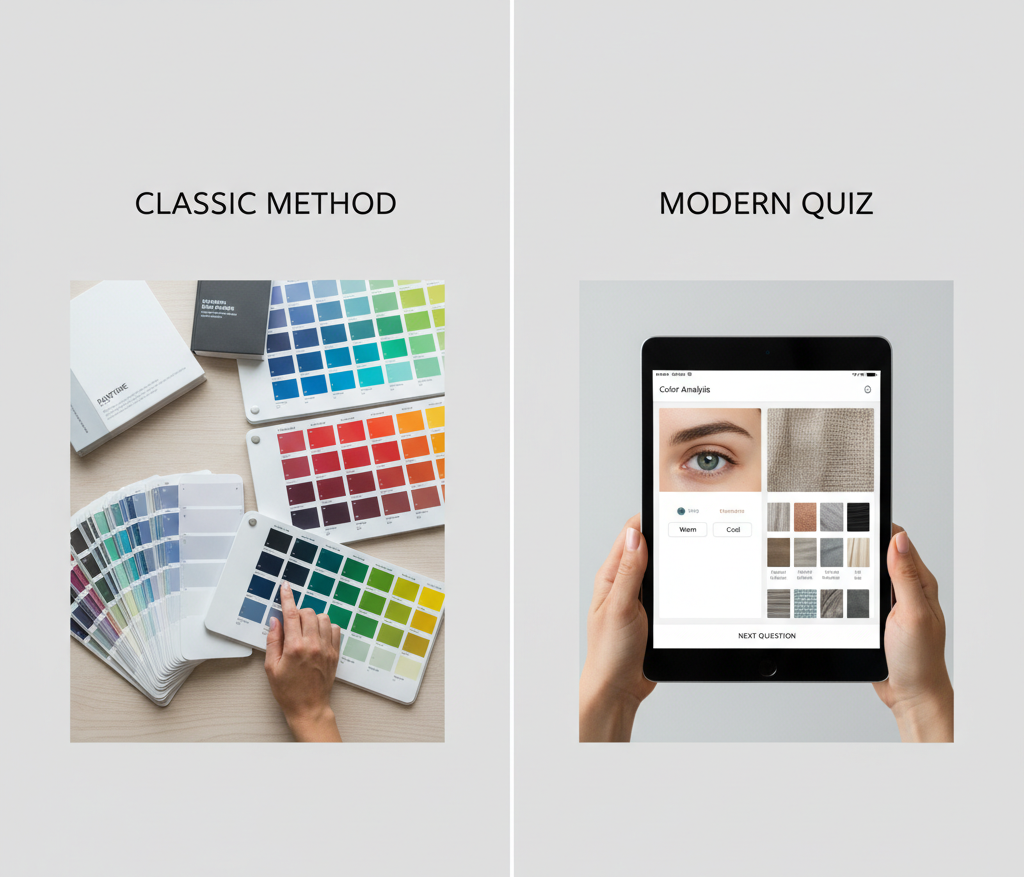
Take at least two or three different color analysis quizzes and see where the results overlap. If you consistently get Soft Summer and True Summer, the answer is almost certainly in that cool, muted Summer family. If you are getting wildly different answers every time, it is a sign that you need to dig into the specific characteristics of each season more carefully.
Step 5 – Test the Results Yourself
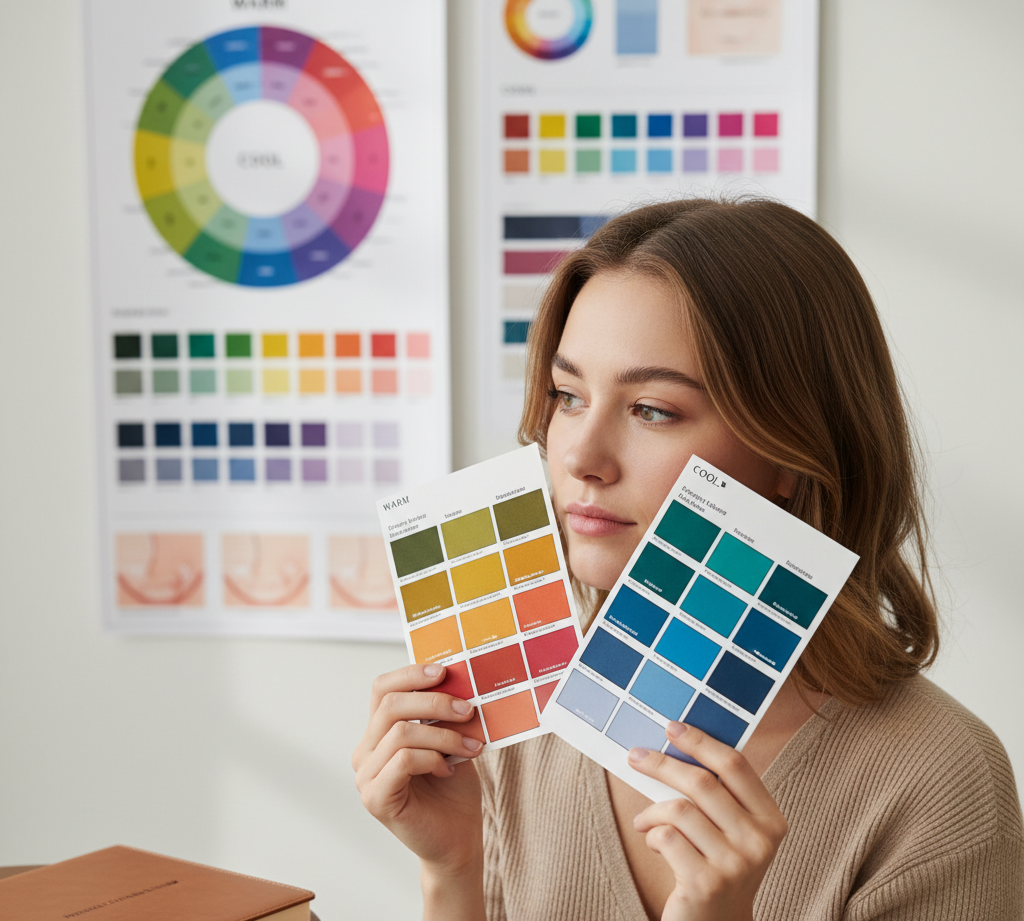
This is the step that actually confirms everything. Gather fabric swatches or clothing items in the colors of the season you think you are. Hold them up to your face in natural light, no makeup, and look in the mirror.
The right colors will do a few things. Your skin will look clear and even. Any redness or discoloration will seem to fade. Your eyes will look brighter. You will look awake and healthy.
The wrong colors will do the opposite. You will suddenly notice dark circles. Your skin will look blotchy or dull. You might look tired even though you slept fine.
That physical reaction is more reliable than any quiz result, and it will confirm what the quiz is pointing you toward.
Understanding the 12-Season System vs the 4-Season System
If you have been doing research on color analysis, you have probably already come across the 12-season system. This is an extension of the original four seasons that breaks each one into three sub-seasons based on whether your coloring leans more toward depth, warmth, or chroma.
So instead of just Autumn, you have True Autumn, Soft Autumn, and Dark Autumn. Instead of just Summer, you have True Summer, Light Summer, and Soft Summer.
Most beginner color analysis quizzes work within the four-season system, and that is completely fine to start with. The four-season result will get you 80 to 90 percent of the way there. Once you have nailed down which main season you belong to, you can start exploring the sub-seasons for more precision.
Do not let the 12-season system overwhelm you if you are just starting out. Get your four-season result first.
Common Mistakes People Make After Getting Their Season
Getting your season result is just the beginning. Here are the mistakes I see people make right after they figure it out.
Thinking they can never wear other colors again. That is not how this works. Your season tells you which colors will make you look your best, not which colors you are forbidden from wearing. You can wear whatever you want. You just now know which ones are working with you and which ones are working against you.
Going out and replacing their entire wardrobe immediately. Take your time. Start by identifying what you already own that falls within your palette and notice how differently you feel in those pieces versus the ones outside it.
Ignoring the system for casual wear and only applying it to “important” outfits. The whole point is that your everyday colors matter too. The difference in how you look and feel in your season colors versus outside them shows up in photos, in video calls, and in how people respond to you in ordinary situations.
What to Do If You Are Between Two Seasons
This happens more often than you would think. Some people genuinely sit on the border between two seasons, especially between neighboring seasons like Spring and Autumn, or Summer and Winter, which share warmth or coolness but differ in depth.
If you keep getting results in two different seasons, compare their palettes side by side. Look at where they overlap. Start with those shared colors and see how they look on you. Often the crossover colors will work fine for both seasons, and they can help you figure out which direction you lean more naturally.
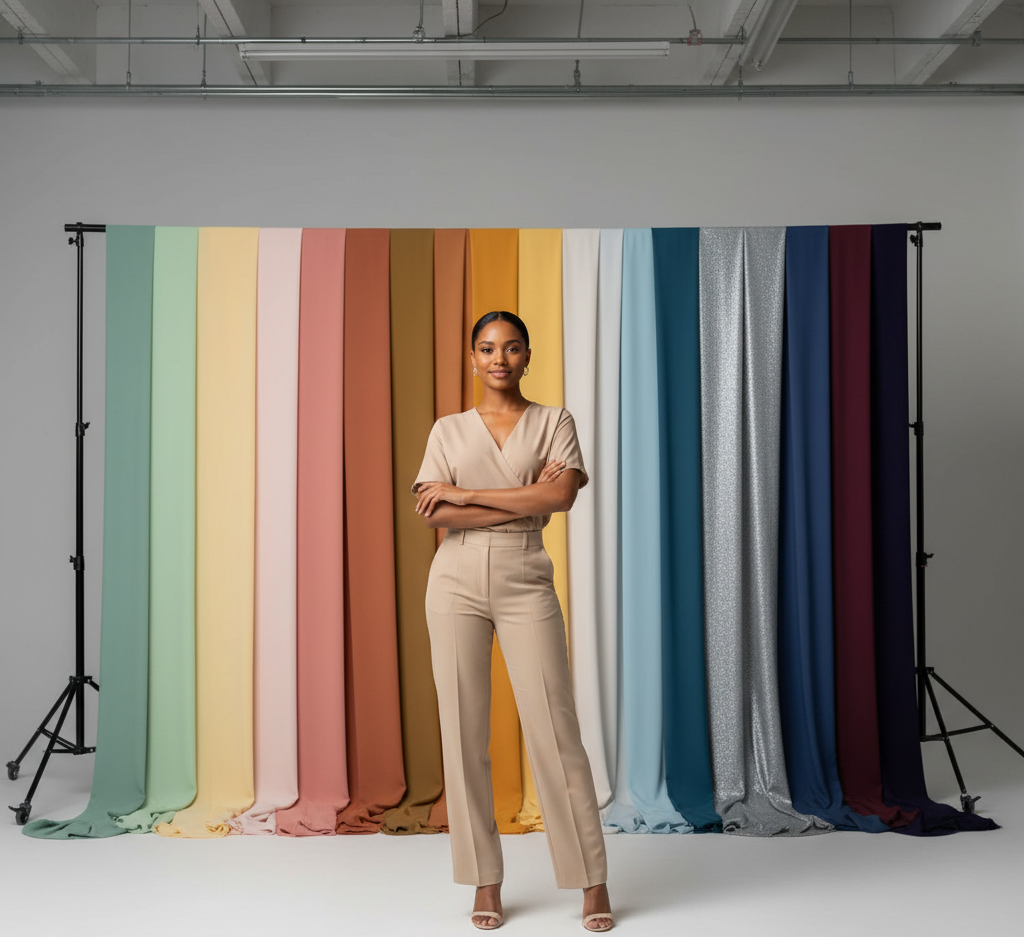
The other option, if you want a definitive answer, is to invest in an in-person or virtual color analysis session with a trained analyst. An experienced color analyst will drape actual fabric swatches around your face and the difference between seasons becomes immediately visible. It is the most accurate way to get your result, and many people find that it is worth the investment for the clarity it provides.
The Best Color Analysis Quizzes Worth Trying
Not all quizzes are created equal. Here is what to look for in a good color analysis quiz.
It should ask about undertone separately from surface skin tone. It should ask about the temperature of your natural hair color, not just the shade. It should ask about eye color in detail, including what flecks or rings appear in the iris. It should give you an explanation of the result, not just a label.
Longer quizzes with more detailed questions tend to be more accurate than the quick five-question ones. The more nuance a quiz builds in, the closer it will get to your actual season.
Final Thoughts on Getting Your Color Season Right
Finding your color season through a color analysis quiz is one of those small investments that pays off in a surprisingly big way. Not because fashion rules are worth following for their own sake, but because understanding which colors genuinely flatter you takes the guesswork out of getting dressed and helps you spend your money on clothes you will actually wear.
Take the quiz properly. Use natural light. Be honest about your natural features. Test the results with actual fabric. And give yourself permission to sit with the process for a bit rather than expecting one five-minute quiz to have all the answers.
Once you find your season, you will wonder how you ever shopped without knowing it.