
Let me start with something honest.
Most of us don’t actually know which colors look good on us.
We think we do.
But usually we just wear what’s trending… or what looked good on someone else… or what was on sale.
And then we wonder why some outfits feel “off” even when the fit is perfect.
That’s where a 4 season color analysis quiz becomes helpful — not in a dramatic life-changing way — but in a practical, everyday way.
It helps you stop guessing.
4 Season Color Analysis Quiz
Your Color Analysis Result
Based on your answers, your seasonal color palette is:
🔥 Most Taken Quizzes Worldwide 🌍
Why colors matter more than we think
You can wear the same shirt in two different shades and look completely different.
One makes your skin look clear.
The other makes you look tired.
Same fabric. Same design. Different color.
That difference isn’t random.
It usually connects to undertone and contrast — which is exactly what the 4 season color analysis system is based on.
The idea behind the 4 seasons (without overcomplicating it)
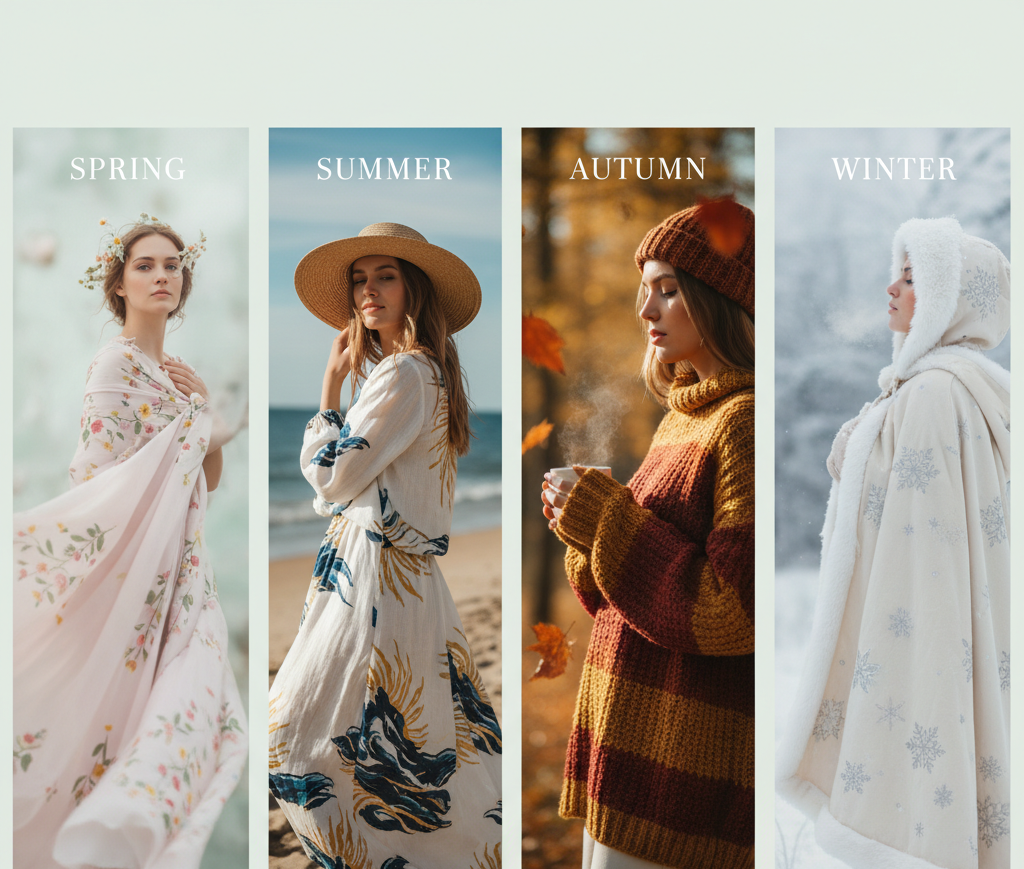
The system groups people into four main seasonal color palettes:
Spring
Summer
Autumn
Winter
Each one reflects natural coloring patterns.
Not personality. Not style preference. Just coloring.
Some people naturally have warmth in their skin. Others lean cool.
Some have soft blended features. Others have strong contrast.
Once you notice it, it becomes obvious.
A very simple breakdown
I’m not going to make this overly technical.
Just the basics.
Spring
Usually warm and lighter.
Think peach, coral, warm beige, light turquoise.
Very dark or heavy shades can overpower Spring types.
They tend to look fresher in lighter warm tones.
Summer
Cool and softer.
Not extremely bright. Not super deep.
Dusty pink, lavender, soft navy, cool gray.
Muted cool tones tend to look calm and balanced.
Autumn
Warm and earthy.
Olive green, mustard, rust, deep brown.
Autumn palettes usually feel rich and grounded.
Pastels often feel disconnected on this type.
Winter
Cool and high contrast.
Black and white together. Jewel tones. Clear red. Emerald.
Winter types can handle boldness that would overwhelm others.
Soft muted shades can sometimes wash them out.
What a 4 season color analysis quiz actually helps with
Let’s make this practical.
When you take a proper 4 season color analysis quiz, you start noticing patterns:
gold jewelry looks better than silver (or the opposite).
certain lipsticks make your teeth look whiter.
Why some neutrals feel dull while others look sharp.
It simplifies decision making.
Instead of “Do I like this?”
You start asking, “Does this work with my natural coloring?”
And that question changes everything.
Small at-home experiment
Stand in natural daylight.
No heavy makeup.
Hold a bright warm color near your face.
Then try a cool muted color.
Don’t focus on the clothes.
Look at your skin.
One of them will smooth your appearance.
The other might highlight shadows.
That’s seasonal harmony in action.
Is the 4 season system perfect?
No system is perfect.
There are expanded systems like 12-season and 16-season color analysis that go deeper.
But honestly, for most people, the classic 4 season color analysis quiz is already enough to create clarity.
You don’t need complexity to improve your wardrobe.
You need direction.
What you’ll usually get from the quiz
Most well-designed quizzes provide:
Your primary season
Suggested clothing colors
Basic makeup guidance
Neutral shades that work best
Colors that may not flatter you
And even that simple awareness can reduce random shopping.
Something important to remember
Color analysis isn’t a rulebook.
It’s a guide.
If you love a color outside your seasonal palette, wear it.
Confidence beats theory every time.
But if you’ve ever felt like “something is missing” in your outfits… it might not be the style.
It might just be the shade.
And sometimes the simplest 4 season color analysis quiz gives you the answer you didn’t realize you were looking for.
👉 Discover your true seasonal palette with our Color Analysis Quiz and unlock styling, wardrobe, and makeup recommendations tailored to your natural undertone.